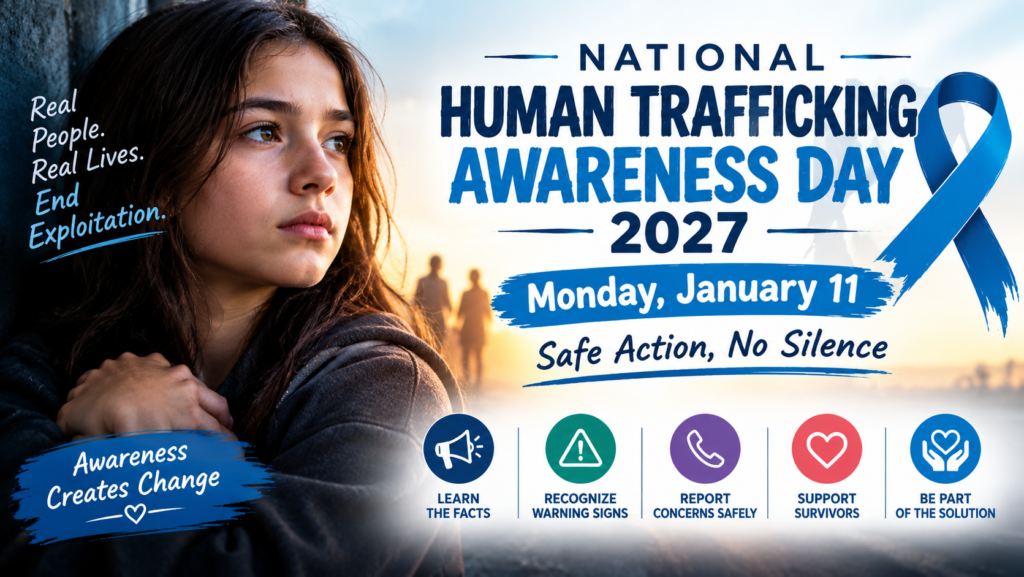
National Human Trafficking Awareness Day 2027 falls on Monday, January 11. It is a day for learning about human trafficking, sharing reliable prevention information and supporting survivors with respect. It is linked to the #WearBlueDay campaign, and January is also recognized in the United States as National Human Trafficking Prevention Month.
This guide explains what the day means, its history, what human trafficking is, possible warning signs, how to report concerns safely and practical ways to take part. It avoids graphic detail and focuses on accurate information and safe action. If you are still enjoying the start of the year, see our New Year’s Day 2027 guide.
Quick answer: National Human Trafficking Awareness Day is observed in the United States every January 11. In 2027, it falls on Monday, January 11. In an emergency in the U.S., call 911.
When Is National Human Trafficking Awareness Day 2027?
National Human Trafficking Awareness Day 2027 is on Monday, January 11, 2027.
- Date: Monday, January 11, 2027
- Frequency: Recognized annually on January 11 in the United States
- Campaign: #WearBlueDay
- Month: January is National Human Trafficking Prevention Month
People are encouraged to wear blue, share trustworthy information and point others toward appropriate support. Blue is used as a visible symbol of awareness. This date is a U.S. observance, and other countries may use different awareness days. The United Nations marks a separate World Day Against Trafficking in Persons on July 30.
What Is National Human Trafficking Awareness Day?
The day exists to promote awareness, prevention education, safe reporting and access to support. It is associated with a national public awareness campaign run by a U.S. government agency.
Awareness matters all year, not just on January 11. Wearing blue does not prevent trafficking by itself, but it can start conversations that lead to education and action.
History of National Human Trafficking Awareness Day
Why January 11 Is Recognized
January 11 was recognized as a National Day of Human Trafficking Awareness in U.S. legislative activity in 2007, when a resolution expressed support for observing the day each year. Over time, January became linked to broader national prevention and awareness activities.
For the exact wording and details, consult the official legislative record directly rather than relying on summaries.
What Is Human Trafficking?
Human trafficking is the exploitation of a person through force, fraud or coercion. It takes different forms, including labor trafficking and sex trafficking, and it can affect people of any age, gender, background or citizenship status.
- It does not require crossing a border or being moved from place to place.
- It can happen within a person’s own community.
- Under U.S. federal law, a minor involved in a commercial sex act is treated as a trafficking victim regardless of force, fraud or coercion.
Possible Warning Signs of Human Trafficking
These indicators are not proof on their own. They are things that may warrant a careful report.
Possible Signs of Control or Exploitation
- Someone appears unable to leave a workplace or living situation freely.
- Another person controls their identification, money, movements or communication.
- Someone seems fearful, unusually coached or unable to speak freely.
- A person shows signs of physical harm, exhaustion or lack of basic needs.
- Someone works excessive hours under suspicious or coercive conditions.
Why Context Matters
No single sign confirms trafficking. Avoid judging people by nationality, race, clothing, occupation or where they are seen. If you notice specific concerning details, report them to the appropriate service and leave any investigation to trained professionals.
How Can People Help Prevent Human Trafficking?
- Learn from official anti-trafficking resources.
- Share accurate information and avoid myths or sensational posts.
- Help schools, workplaces and community groups distribute trusted awareness material.
- Support survivor-centered organizations and services.
- Learn how to report concerns safely.
- Encourage fair labor practices and responsible recruitment in workplaces and supply chains.
- Respect survivors’ privacy and let them decide whether and how to share their experiences.
How to Observe National Human Trafficking Awareness Day 2027
- National Human Trafficking Awareness Day on January 11.
- Share a verified awareness graphic or educational resource.
- Use the hashtag #WearBlueDay and, where appropriate, tag the official campaign account.
- Organize a short awareness session at a school, workplace, library or community center.
- Invite a qualified local service provider to share prevention information.
- Post support resources alongside awareness messages.
- Keep content respectful and never publish identifiable survivor details without informed consent.
How to Report Suspected Human Trafficking
If Someone Is in Immediate Danger
In the United States, call 911 in an emergency. Do not confront a suspected trafficker or attempt a rescue, since that could increase the danger.
U.S. Reporting and Support Resources
- National Human Trafficking Hotline: 1-888-373-7888, or text HELP or INFO to 233733. It can help people find support and report concerns.
- U.S. Department of Homeland Security tip line: 1-866-347-2423, for suspected trafficking and other relevant criminal activity.
- Online information: Official hotline and Blue Campaign websites offer guidance and resources.
A support hotline and law enforcement serve different roles, so choose the option that fits the situation. Please check these numbers on official sites before relying on them, as details can change.
If You Are Outside the United States
The numbers above are U.S.-specific. Readers elsewhere should contact their local emergency service or a trusted, qualified anti-trafficking organization, and should not assume U.S. procedures apply.
Myths and Facts About Human Trafficking
- Myth: Trafficking always involves crossing an international border. Fact: It can happen within a person’s own community.
- Myth: Every victim shows obvious signs of physical abuse. Fact: Signs vary, and some are not visible.
- Myth: One suspicious behavior proves trafficking. Fact: Indicators need context, and trained authorities assess reports.
- Myth: Only one type of person can be trafficked. Fact: People from many backgrounds can be affected.
- Myth: The public should personally confront a suspected trafficker. Fact: Confrontation can increase risk, so report concerns safely.
Ways Schools, Workplaces and Communities Can Participate
- Share official awareness posters and educational materials.
- Offer age-appropriate prevention education.
- Make reporting and employee-support policies easy to find.
- Review recruitment practices and labor protections.
- Partner with qualified local organizations.
- Provide resources without requiring anyone to disclose personal experiences.
If you are building a January awareness calendar, our National Law Enforcement Appreciation Day 2027 guide covers another observance from the same week. To discuss awareness and prevention in a moderated space, communities such as r/humantrafficking on Reddit exist, but they are not a substitute for official reporting channels.
Frequently Asked Questions About National Human Trafficking Awareness Day 2027
What Is Human Trafficking Awareness Day?
It is a U.S. observance held on January 11 to raise awareness, encourage prevention education and promote safe ways to identify and report suspected trafficking. It is associated with #WearBlueDay.
When Is National Human Trafficking Awareness Day 2027?
It falls on Monday, January 11, 2027.
Why Is January 11 Important?
January 11 has been recognized in U.S. legislative activity as a day to raise awareness of human trafficking. It is now associated with public education efforts, including #WearBlueDay.
What Is #WearBlueDay?
It is an awareness initiative in which participants wear blue and share educational messages or official resources on January 11.
How Can People Help Prevent Human Trafficking?
People can learn to recognize possible indicators, share accurate information, support qualified survivor services, promote fair labor practices and report specific concerns safely. They should not confront suspected traffickers or attempt dangerous rescues.
What Are Possible Warning Signs of Human Trafficking?
Possible indicators include restricted freedom of movement, someone else controlling a person’s identification or money, signs of coercion and exploitative working conditions. No single sign proves trafficking, and context matters.
How Do You Report Suspected Human Trafficking in the United States?
In an immediate emergency, call 911. For information, support or to report concerns, call the National Human Trafficking Hotline at 1-888-373-7888 or text HELP or INFO to 233733. Concerns can also be reported to the DHS tip line at 1-866-347-2423.
Does Human Trafficking Always Involve Transporting Someone?
No. It can occur without crossing a border or moving a person from one location to another.
Is National Human Trafficking Awareness Day Observed Worldwide?
January 11 is particularly associated with the U.S. observance. The United Nations’ World Day Against Trafficking in Persons is observed on July 30.
How Can Schools and Workplaces Participate?
They can share verified educational resources, arrange awareness sessions, review safeguarding and reporting procedures and connect people with qualified local organizations.
Countdown to National Human Trafficking Awareness Day 2027
National Human Trafficking Awareness Day 2027,Monday, January 11, 2027
78 days to go (calculated from October 25, 2026).
Browse more seasonal guides on our homepage, or see our National Milk Day 2027 article for another January 11 observance. For general background on the topic, the human trafficking article on Wikipedia is a helpful starting point.