
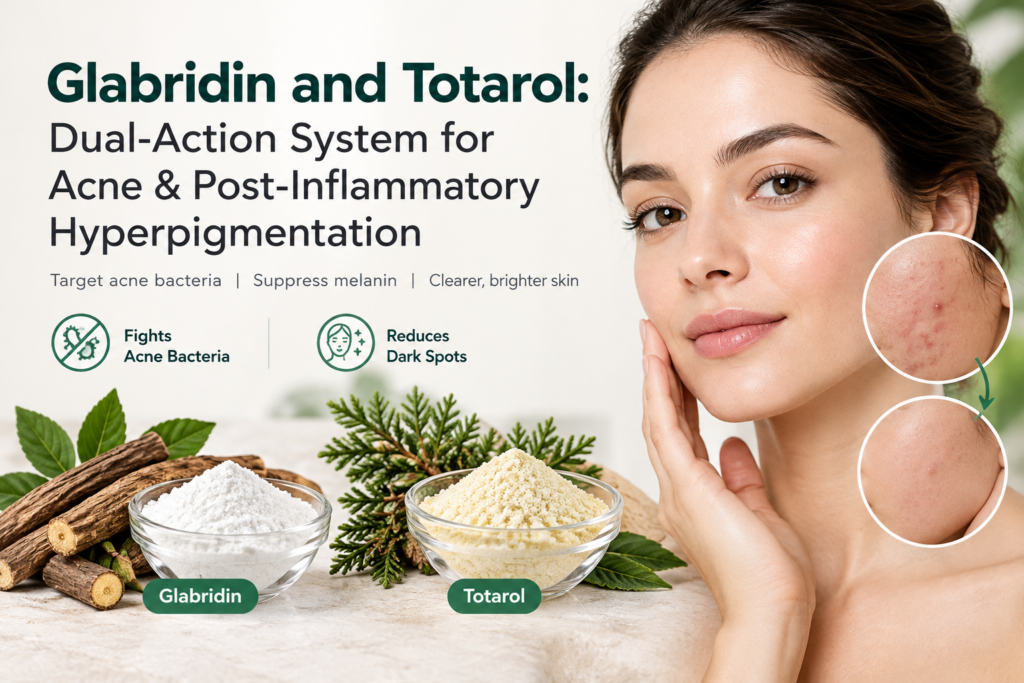
You clear the breakout. A dark spot takes its place. Post-inflammatory hyperpigmentation. You formulate a cream to fix the dark spot. The strong acids irritate the skin, and the breakout comes back. Sound familiar? We see formulators trapped in this cycle every day.
Why Blemish-Prone Skin Needs a Complete System Reset
Formulating for blemish-prone skin requires a complete system reset. Throwing harsh chemicals at the skin barrier is lazy chemistry. You need to target the bacterial load and the pigment factory simultaneously. This is where isolating specific botanical molecules changes the rules of the lab bench.
Totarol: The Antibacterial Engine
Let us start with the antibacterial engine. Totarol.
Most of the industry misunderstands this molecule. They rely on outdated botanical texts. We recently audited the scientific literature and ran extensive Minimum Inhibitory Concentration (MIC) benchmarks. Let us set the record straight. While traditionally linked to the Totara tree, precision extraction from Nageia nagi yields a highly potent, stable active. It absolutely decimates Gram-positive bacteria. It specifically targets the bacteria responsible for acne. It does this without triggering the antibiotic resistance associated with synthetic lab drugs.
Glabridin: The Pigment Suppressor
But killing the bacteria is only half the job. The skin is already angry. The cellular alarm is ringing. That alarm tells the melanocytes to pump out pigment to protect the damaged tissue.
Enter Glabridin.
Forget what you know about crude licorice root extracts. Crude plant soup is brown, sticky, and terrible for emulsion stability. High-purity Glabridin powder is white. Let me repeat that for the compounders in the back. White.
When you source the 99% purity grade from our manufacturing lines at glabridin.net, you are buying a highly refined tyrosinase inhibitor. We strip away the heavy resins. We filter out the color-causing impurities. What remains is a molecule that stops melanin production with surgical precision. It does not smell like dirt. It does not turn your beautiful white lotion tan after three months in the stability oven.
Why Combine Totarol and Glabridin in One Formula?
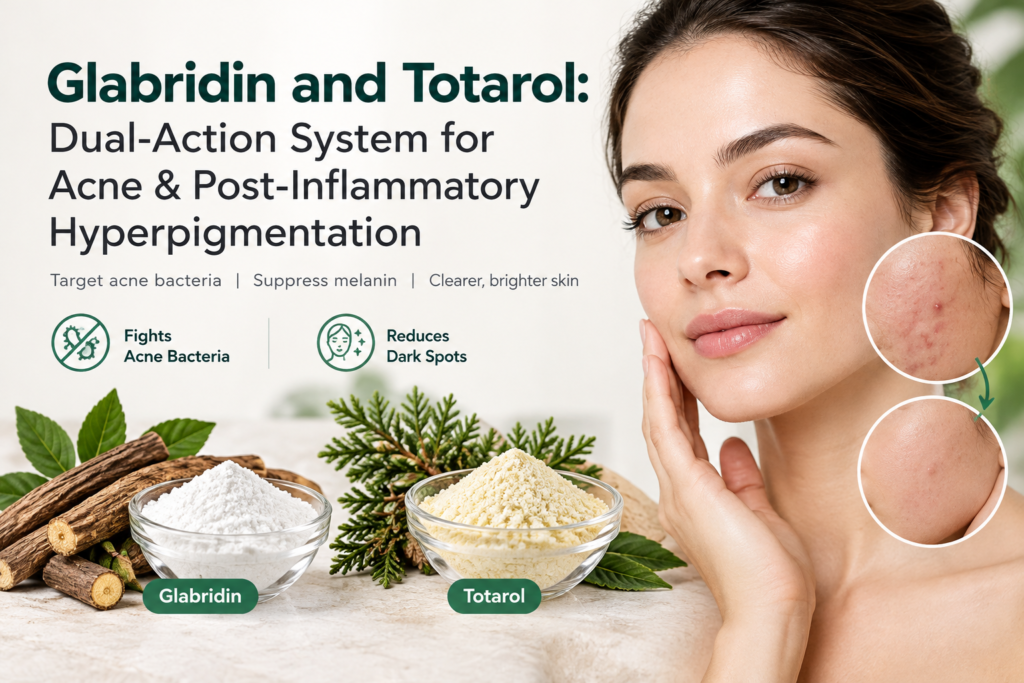
Why combine them in one tank? Because acne and dark spots are the exact same biological event, just separated by a few weeks. Totarol drops the bacterial load and calms the site. Glabridin quietly cuts the tyrosinase signal. The dark mark never even forms.
Glabridin vs Totarol: Technical Specifications
We manufacture these actives. We know how they behave when you scale up from a glass beaker to a thousand-kilo mixing vat. Here are the hard numbers you need for your batch sheets.
| Specification | Glabridin | Totarol |
| INCI Name | Glabridin | Totarol |
| Botanical Source | Glycyrrhiza glabra (Licorice Root) | Nageia nagi / Podocarpus totara |
| Purity Level | Up to 99% | ≥ 98% |
| Appearance | White powder | Pale yellow to off-white crystalline powder |
| Solubility | Butylene Glycol, Propylene Glycol | Ethanol, Lipids, Cosmetic Oils |
| Temperature Tolerance | Heat sensitive (Add below 40°C) | Highly heat stable |
| Formulation Phase | Cool-down / Post-emulsification | Oil phase / Lipid phase |
| Recommended Usage | 0.01% – 0.1% | 0.05% – 0.2% |
| Primary Mechanism | Tyrosinase enzyme inhibition | Antibacterial action (Low MIC) |
| Supplier | glabridin.net | glabridin.net |
Mixing Protocols for Totarol and Glabridin
Let us talk about actual mixing protocols.
How to Formulate with Totarol
Totarol is hydrophobic. It hates your water phase. Do not force it. Dissolve it directly into your lipids. Because it is incredibly heat stable, you can add it before you heat your oil phase for emulsification. As a bonus, it acts as a powerful antioxidant for your carrier oils. It actually extends the shelf life of your entire lipid system while it waits to be applied to the skin.
How to Formulate with Glabridin
Glabridin is the diva of the pair. It hates high temperatures. Do not dump it into the main homogenizer at 80 degrees Celsius. You will destroy the molecule. Pre-dissolve it in a suitable glycol. Wait for your emulsion to cool completely. Drop it in strictly below 40 degrees. Keep your final formula pH slightly acidic, ideally right around 5.5. Drift too far into the alkaline range, and the active degrades.
A Better Alternative to Harsh Acne Actives
Think about the acne lines sitting on store shelves right now. Salicylic acid formulations that cause severe flaking. Benzoyl peroxide creams that bleach pillowcases and destroy the skin’s acid mantle.
Consumers read ingredient labels now. They refuse to burn their faces off just to clear a pimple. They demand efficacy without the collateral damage.
This specific combination delivers exactly that. Clinical-grade antibacterial action. Top-tier pigment suppression. Because both molecules are lipophilic or glycol-friendly, they slide straight past the skin’s lipid barrier. They penetrate deeper. You can use lower active percentages and still achieve better clinical results. That keeps your cost per kilo down while pushing your efficacy up.
Build Smarter Skincare Systems with Isolated Molecules
We do not just broker powders from third parties. We manage the extraction. We verify the botanical taxonomy. We run the HPLC charts. We figure out exactly what breaks these molecules so you do not have to find out during a costly failed pilot batch.
Stop guessing with unstable extracts. Grab your beakers. Adjust your formulation phases. Start building smarter skincare systems with isolated molecules that actually perform on the bench.