
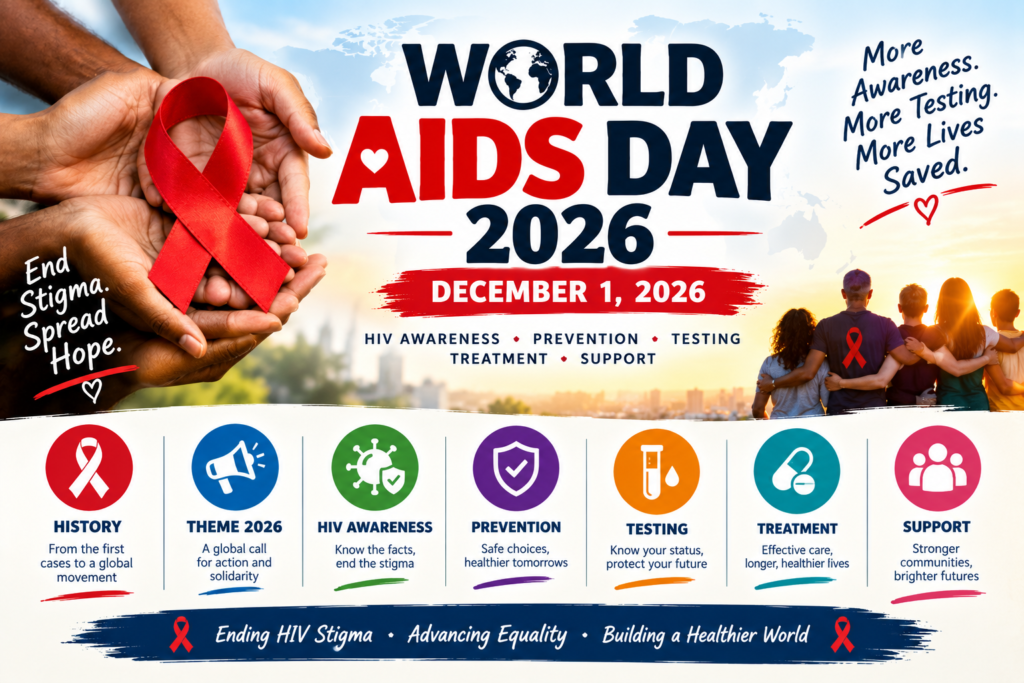
World AIDS Day 2026 falls on Tuesday, December 1, 2026. Every year on this date, people around the world unite to support those living with HIV, remember those lost to AIDS-related illnesses, and renew the commitment to prevention, testing, treatment and dignity for everyone.
It is a day of remembrance, and it is also a day of action. Much has changed since the 1980s, when an HIV diagnosis was often a death sentence. Today, effective treatment lets people with HIV live long, healthy lives. Stigma, misinformation and unequal access to care still stand in the way. This guide covers the date, history, meaning, theme status, facts, activities, quotes and messages for World AIDS Day 2026, so you can learn, share and take part with confidence.
Communities that honor remembrance days understand how powerful shared reflection can be. If this resonates with you, explore more observances and remembrance content on MemorialDay2026.com.
When Is World AIDS Day 2026?
World AIDS Day 2026 is on Tuesday, December 1, 2026.
The observance is held on December 1 every year. It is an international health-awareness day, not a universal public holiday, so offices and schools stay open in most countries. Many communities still hold events, vigils, talks and testing drives that day or around it.
In short, World AIDS Day 2026 is on Tuesday, December 1. It raises awareness about HIV, supports people living with HIV, remembers those who have died from AIDS-related illnesses, and encourages progress in prevention, testing and treatment.
Quick Facts at a Glance
| Detail | Information |
|---|---|
| Observance | World AIDS Day |
| Date in 2026 | Tuesday, December 1, 2026 |
| Frequency | Every year on December 1 |
| First observed | 1988 |
| Symbol | The red ribbon |
| Type | International health-awareness day |
| 2026 theme status | Official announcement pending |
What Is World AIDS Day?
World AIDS Day is a global awareness day dedicated to HIV and AIDS. It gives governments, health organizations, schools, workplaces, faith groups and individuals a shared moment to focus on the epidemic.
The day does three things:
- Educates the public with accurate information about HIV transmission, prevention, testing and treatment.
- Unites communities in solidarity with people living with HIV.
- Honors the millions of lives lost since the epidemic began.
The World AIDS Day red ribbon is its most recognized symbol. Wearing or displaying one shows support for people living with HIV, remembrance of those who have died, and a commitment to ending stigma. The ribbon first appeared in New York in 1991 and became a worldwide emblem of compassion. You can read more about its origins in this overview of the red ribbon.
World AIDS Day History
The first World AIDS Day was observed in 1988, after health ministers from around the world met to discuss the global response to the epidemic. It was the first global health day ever established, and it set a model for the awareness days that followed. For a broader timeline of the observance, see the World AIDS Day entry on Wikipedia.
Over the decades, the day grew from a small campaign into a worldwide movement. International health agencies, national governments, researchers, activists and community organizations all shape it. People living with HIV have been central to this story, and their leadership changed how the world treats health, rights and dignity.
Each year’s campaign focuses on a theme. A few notable examples:
- 1997: Children Living in a World with AIDS
- 2023: Let Communities Lead
- 2024: Take the Rights Path
- 2025: Overcoming Disruption, Transforming the AIDS Response
These themes show how the conversation has moved from basic awareness to community leadership, human rights and sustainable global action.
World AIDS Day 2026 Theme: Official Announcement Pending
The World AIDS Day theme 2026 has not been confirmed as a separate official campaign message at the time of writing. Campaign wording is usually finalized and shared in the months before December 1. Be careful when you see a 2026 theme on unofficial pages, because some of them simply repeat the previous year’s message.
Whatever wording is announced, the day’s core priorities are likely to stay the same:
- Expanding access to HIV prevention and testing
- Keeping treatment and care available to everyone who needs it
- Supporting community-led services
- Ending stigma and discrimination
This section will be updated as soon as the official theme, hashtags and campaign materials are released.
Why Is World AIDS Day Important?
HIV remains a major global health issue, and awareness days keep it visible. Here is why World AIDS Day still matters:
- It spreads accurate information. Myths about HIV transmission still cause fear and unnecessary exclusion.
- It encourages testing. Knowing your status is the first step toward prevention or treatment.
- It supports access to care. Treatment works best when it is affordable, available and free from judgment.
- It recognizes community heroes. Health workers, peer educators, volunteers and activists keep the response moving.
- It fights stigma. Fear of discrimination stops many people from testing or seeking care.
- It keeps attention on funding and action. Progress can slow quickly when public attention fades.
What Is the Difference Between HIV and AIDS?
People often use the two terms as if they mean the same thing, but they do not.
- HIV (human immunodeficiency virus) is a virus that attacks the body’s immune system.
- AIDS (acquired immunodeficiency syndrome) is the most advanced stage of HIV infection, when the immune system is severely damaged and specific clinical criteria are met.
Having HIV does not mean a person has AIDS. With effective treatment, most people with HIV never develop AIDS and can live long, healthy lives. AIDS is a late stage of untreated infection, not an automatic result of a diagnosis.
HIV Prevention, Testing and Treatment
Why HIV Testing Matters
Testing is the only way to know your HIV status. Early diagnosis means earlier treatment, better health outcomes and a lower chance of passing the virus on. Testing is quick, and many places offer it confidentially or as a self-test.
Prevention Options
There is no single prevention method that suits everyone. Evidence-based options include:
- Condoms used consistently and correctly
- PrEP (pre-exposure prophylaxis): medication taken by HIV-negative people to reduce their risk of infection
- PEP (post-exposure prophylaxis): emergency medication started as soon as possible after a possible exposure, within 72 hours
- Safe injection practices and access to sterile equipment
- Treatment of people living with HIV, which also prevents onward transmission
Treatment and U=U
Antiretroviral therapy (ART) is a combination of medicines that keeps the virus under control. It does not cure HIV, but it lets people stay healthy and protects their immune systems.
When ART reduces the amount of virus in the blood to an undetectable level, the person cannot pass HIV to a sexual partner. This principle is known as U=U (Undetectable = Untransmittable), and it is one of the most powerful messages in HIV awareness today.
For personal advice about testing, prevention or treatment, speak with a qualified healthcare professional or a local health service.
How to Observe World AIDS Day 2026
You do not need a large event to make a difference. Simple actions help:
- Wear a red ribbon to show solidarity and start conversations.
- Share verified information on social media, and correct myths respectfully.
- Learn where to get tested in your area and pass that information on.
- Attend an awareness event or vigil in your community or online.
- Support reputable, community-led HIV organizations through donations or volunteering.
- Organize a school, workplace or community activity that educates without singling anyone out.
- Use respectful language, such as “people living with HIV,” and promote confidential, stigma-free healthcare.
Many people also use this day to remember loved ones. If you are planning a tribute or a moment of reflection, you can find more ideas on our remembrance and observance pages.
World AIDS Day 2026 Activities for Schools and Communities
Schools, colleges and community groups can turn World AIDS Day into a learning opportunity. Good activities include:
- Student presentations and fact-checking exercises that separate myths from facts
- Awareness posters that use verified public-health information
- Red-ribbon campaigns with a short explanation of what the ribbon means
- Talks by qualified health professionals followed by a question-and-answer session
- Community discussions about stigma and equal access to care
- Volunteering or fundraising with established organizations
Keep every activity educational and respectful. Never ask students or participants to share their HIV status, and make sure every session protects privacy and dignity.
World AIDS Day 2026 Quotes
The lines below are original messages written for World AIDS Day 2026.
- “Awareness creates understanding, and understanding helps build a world without stigma.”
- “Compassion is the first step toward a healthier, fairer future for everyone.”
- “A diagnosis is a fact of health, never a measure of a person’s worth.”
- “Every test taken, every myth corrected and every kind word shared moves us closer to an AIDS-free future.”
- “We remember those we lost by protecting the health and dignity of those living today.”
- “Knowledge builds courage, and courage builds a community where no one is left behind.”
World AIDS Day 2026 Messages and Wishes
Short World AIDS Day Messages
- Today we remember, we support and we act. Happy and meaningful World AIDS Day.
- Wearing red today for awareness, compassion and hope.
- Test. Learn. Support. Together we can end stigma.
Awareness Messages for Social Media
- This December 1, share facts, not fear. Accurate information saves lives. #WorldAIDSDay
- HIV is manageable with the right care. Stigma is the real barrier. Let’s remove it.
- Know your status, support your community and speak up for equal access to care.
Messages of Support for People Living with HIV
- You are not defined by a diagnosis. Your strength, voice and leadership inspire us.
- Today and every day, you deserve respect, care and a future full of possibility.
- Thank you to everyone living with HIV who is changing the conversation for the better.
Workplace and School Awareness Messages
- Our workplace stands for respect, privacy and equal treatment for everyone.
- Learning about HIV helps us build a more caring classroom and community.
Messages Promoting Testing, Prevention and Treatment
- Testing is quick, private and empowering. Knowing your status is a healthy first step.
- Prevention works, treatment works and U=U works. Spread the word.
Messages Encouraging Compassion and an End to Discrimination
- Kindness costs nothing, and it can change someone’s entire experience of healthcare.
- Let’s replace judgment with understanding, today and every day.
World AIDS Day Facts
- World AIDS Day is observed every year on December 1.
- The first World AIDS Day took place in 1988.
- In 2026, December 1 falls on a Tuesday.
- The red ribbon is a widely recognized symbol of HIV awareness and solidarity.
- HIV and AIDS are not interchangeable terms.
- Effective HIV treatment supports long and healthy lives.
- People who maintain an undetectable viral load through treatment do not sexually transmit HIV.
Frequently Asked Questions About World AIDS Day 2026
When is World AIDS Day?
World AIDS Day is observed annually on December 1. In 2026, it falls on Tuesday.
What is the theme of World AIDS Day 2026?
The official 2026 theme is still pending confirmation. Check back for updates once the campaign wording is released.
Why is World AIDS Day celebrated?
It raises awareness about HIV, supports people living with HIV, remembers those who have died from AIDS-related illnesses, and encourages prevention, treatment and stigma-free care.
What does the red ribbon represent?
The red ribbon symbolizes HIV awareness, support and solidarity with people living with HIV.
What is the difference between HIV and AIDS?
HIV is the virus. AIDS is the most advanced stage of HIV infection. With effective treatment, many people living with HIV never develop AIDS.
How can I participate in World AIDS Day?
Share accurate information, attend an awareness event, learn about testing and prevention, support community organizations, or help challenge HIV-related stigma.
Countdown to World AIDS Day 2026
As of October 9, 2026, there are 53 days until World AIDS Day on Tuesday, December 1. That leaves plenty of time to plan a school activity, organize a community event or simply learn something new.
Conclusion
World AIDS Day 2026 on Tuesday, December 1 is a chance to pair remembrance with action. Accurate information, accessible testing, effective treatment and community support have transformed the HIV response, yet stigma and inequality remain. Each of us can help by learning the facts, sharing reliable information and treating people living with HIV with dignity.
Wear a red ribbon, start a conversation and encourage someone to get informed. Small steps, taken together, build a world where everyone can live free from stigma.