
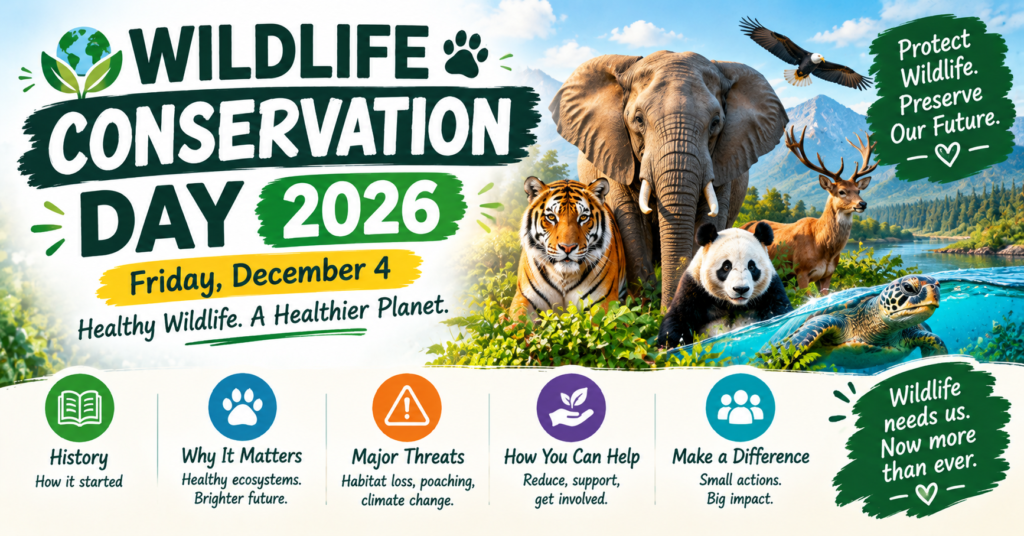
Wild animals, plants and the places they live make up the living fabric of our planet. Healthy forests, rivers, oceans and grasslands depend on a rich variety of species, and people depend on those ecosystems for food, clean water and livelihoods. Wildlife conservation is the effort to protect that web of life, and Wildlife Conservation Day 2026 on Friday, December 4 is a timely reminder to turn concern into action.
December 4, 2026 is the date commonly associated with World Wildlife Conservation Day. It is a good moment to learn what threatens wildlife and what each of us can do about it. For more nature-focused observances, browse our Memorial Day 2026 guide.
When Is Wildlife Conservation Day 2026?
Wildlife Conservation Day 2026 is on Friday, December 4, in calendars that recognize World Wildlife Conservation Day. It is an opportunity to learn about threats to wildlife and take practical steps to support conservation.
Important Date Clarification
Do not confuse this December 4 observance with the United Nations’ official World Wildlife Day, which is held every year on March 3. The UN proclaimed World Wildlife Day in 2013. The two observances share a purpose but are separate events with different dates and different origins.
| Observance | Date in 2026 | Notes |
|---|---|---|
| Wildlife Conservation Day (World Wildlife Conservation Day) | Friday, December 4 | Awareness day commonly listed on December 4 |
| UN World Wildlife Day | March 3 (annual) | Official UN international day |
In short, wildlife conservation means protecting wild species and the habitats they depend on, so that ecosystems stay healthy over the long term.
Countdown to Wildlife Conservation Day 2026
As of October 10, 2026, there are 55 days to go until Friday, December 4, 2026. (Developer note: replace this with a dynamic countdown so it updates daily, and delete this line before publishing.)
What Is Wildlife Conservation Day?
Wildlife Conservation Day encourages awareness of wildlife protection, habitat preservation, biodiversity and responsible human interaction with nature. It is less about a single event and more about starting conversations at home, in classrooms and in communities.
What Does Wildlife Conservation Mean?
Wildlife conservation is the practice of protecting wild species and the habitats they rely on, while supporting the long-term health of ecosystems. It covers animals and plants alike, and it ranges from protected areas and scientific monitoring to anti-trafficking enforcement and community-led projects. You can read a broader overview in the wildlife conservation article on Wikipedia.
Why Is Wildlife Conservation Day Celebrated?
It is used to:
- Raise awareness about endangered species
- Encourage the protection of natural habitats
- Highlight the effects of illegal wildlife trade and poaching
- Inspire communities to take part in conservation
- Promote responsible choices that reduce harm to wildlife
History of Wildlife Conservation Day
The December 4 observance appears in many awareness calendars, but it is not a United Nations-designated international day, and there is no single widely agreed founder or official origin. For that reason, it is best understood as a community and awareness observance rather than a formally established one.
How Wildlife Conservation Became a Global Priority
Concern for wildlife has grown over many decades. Governments created protected areas, scientists began tracking species populations, and conservation organizations emerged to protect habitats and endangered species. International cooperation followed, because animals and plants cross borders and so does the trade in them.
World Wildlife Day and Its Official History
The official international day is World Wildlife Day on March 3. The UN General Assembly proclaimed it on December 20, 2013. The date marks the 1973 adoption of the Convention on International Trade in Endangered Species of Wild Fauna and Flora, known as CITES, an international agreement that regulates trade in protected species.
Why Conservation Awareness Matters Today
Awareness drives action. When people understand how habitat protection, responsible trade, species recovery and community participation fit together, they are more likely to support policies, choose sustainable products and take part in local projects.
Why Is Wildlife Conservation Important?
Protecting Biodiversity
Biodiversity is the variety of life on Earth. Each species plays a role, and diverse ecosystems tend to be more resilient to change, disease and disturbance.
Maintaining Healthy Ecosystems
Ecosystems rely on many different organisms:
- Pollinators such as bees, butterflies and bats support plant reproduction.
- Seed dispersers help forests regrow and spread.
- Predators keep prey populations in balance.
- Decomposers recycle nutrients back into the soil.
Supporting People and Communities
Healthy ecosystems support food systems, clean water, livelihoods, nature-based tourism and cultural traditions. For many communities, wildlife is part of both daily life and heritage.
Protecting Future Generations
Conserving species and habitats helps preserve natural heritage and ecological resources for the future. Once a species is gone, it cannot be brought back, so prevention is far better than repair.
Major Threats to Wildlife
Habitat Loss and Fragmentation
Deforestation, urban expansion, agriculture and infrastructure can shrink habitats or split them into isolated patches, making it harder for animals to find food, mates and safe routes.
Climate Change
Changing temperatures, rainfall patterns and extreme weather can alter habitats and food supplies, forcing species to move, adapt or decline.
Poaching and Illegal Wildlife Trade
The illegal capture, killing and trade of protected species and wildlife products threatens many populations. It is one of the most serious pressures on species such as pangolins, rhinoceroses and elephants.
Pollution and Plastic Waste
Waste and contaminants can harm land, rivers, oceans and the animals that live in them. Marine animals are especially vulnerable to plastic debris.
Overexploitation of Natural Resources
Unsustainable hunting, fishing and harvesting can reduce populations faster than they can recover.
Endangered Animals That Need Protection
These species are often highlighted in conservation work. Conservation status varies by species and changes over time, so check the IUCN Red List for the latest assessments before sharing figures.
- Tigers: Threatened by habitat loss and poaching.
- Asian elephants: Affected by shrinking habitat and conflict with people.
- Rhinoceroses: Targeted by poaching, with status varying by species.
- Sea turtles: Face threats from bycatch, coastal development and pollution.
- Pangolins: Heavily affected by illegal trade.
- Certain amphibians and freshwater species: Sensitive to pollution and habitat change.
Why Protecting Habitats Is Essential
Protecting the places where species feed, breed and migrate is often as important as protecting individual animals. A safe animal in a shrinking habitat still faces an uncertain future.
The Role of Conservation Organizations
Conservation groups contribute through habitat restoration, scientific monitoring, anti-trafficking work, community-led projects and species recovery programs. Supporting reputable organizations helps these efforts continue.
10 Ways to Help Wildlife Conservation Day 2026
- Learn about local wildlife. Find out which species live in your region and what they need.
- Support reputable conservation organizations. Check how they use donations.
- Avoid products from illegally traded wildlife. If something looks like it comes from a protected species, do not buy it.
- Reduce single-use plastic. Dispose of waste responsibly.
- Plant native species where appropriate. Native plants support local insects, birds and other animals.
- Keep a respectful distance. Never chase or crowd wild animals.
- Never feed wildlife unless local authorities specifically advise it.
- Choose responsible wildlife tourism. Avoid attractions that exploit animals.
- Report suspected wildlife crime to the appropriate authorities.
- Share reliable information with friends and family.
How to Help Wildlife from Home
- Reduce household waste and recycle properly
- Make outdoor spaces safer for wildlife, such as covering hazards and reducing harsh chemicals
- Choose sustainable products
- Learn about habitat-friendly gardening
Recycling is one of the simplest daily habits, so see our guide to America Recycles Day 2026.
How to Help Wildlife While Traveling
- Follow park rules and stay on marked paths
- Avoid animal attractions that involve exploitation
- Respect protected habitats
- Choose responsible local guides
Wildlife Conservation Day 2026 Activities for Schools and Families
Activities for Students
- Create a wildlife conservation poster
- Research a threatened species and its habitat
- Prepare a presentation on biodiversity
- Organize a litter-reduction or habitat-awareness project
- Write a short essay on protecting endangered animals
Community Activities
- Organize a native-planting event where suitable
- Invite a wildlife expert or conservation educator
- Host a documentary screening and discussion
- Share verified information about local conservation projects
Keep activities safe and supervised, and make sure they never disturb wild animals or damage their habitats. For other community-minded ideas, see our Make a Difference Day 2026 guide.
Wildlife Conservation Quotes, Messages and Captions
Original Wildlife Conservation Messages
These are original messages, not famous quotations:
- “Protecting wildlife means protecting the natural world we all depend on.”
- “Every habitat matters, and every responsible action can make a difference.”
- “Let future generations inherit a world rich in wildlife and biodiversity.”
Social Media Captions
- “Wildlife needs safe habitats, not just our admiration. #WildlifeConservation”
- “Celebrate nature by taking action to protect it.”
- “Small choices can support a healthier planet.”
Wildlife Conservation Facts
- The UN’s World Wildlife Day takes place on March 3 each year.
- That date commemorates the adoption of CITES in 1973.
- Wildlife conservation includes both animal and plant species.
- Habitat loss, illegal trade and climate change are important conservation concerns.
- Conservation can involve protected areas, scientific research, law enforcement and local communities.
Frequently Asked Questions About Wildlife Conservation Day 2026
Why is Wildlife Conservation Day celebrated?
It is used to raise awareness about protecting wild animals, plants and habitats and to encourage practical conservation action.
When is Wildlife Conservation Day 2026?
The December 4 observance falls on Friday in 2026.
Is Wildlife Conservation Day the same as World Wildlife Day?
No. They are commonly listed on different dates. World Wildlife Conservation Day is associated with December 4, while the official UN World Wildlife Day is March 3.
What are the biggest threats to wildlife?
Major threats include habitat loss, climate change, illegal wildlife trade, pollution and unsustainable exploitation of natural resources.
How can students help protect wildlife?
Students can learn about threatened species, reduce waste, create awareness projects and support supervised local conservation initiatives.
How can individuals support endangered animals?
People can support reputable conservation groups, avoid wildlife products from illegal trade, make sustainable choices and respect wildlife in natural habitats.
Conclusion: Every Action Counts for Wildlife
Biodiversity and healthy habitats underpin the world we live in, and protecting them is a shared responsibility. Wildlife Conservation Day 2026 on Friday, December 4 is a prompt to learn, share and act, but the real impact comes from the choices we make all year, from reducing waste to supporting reputable conservation work. Start with one action from this list, then build from there.