
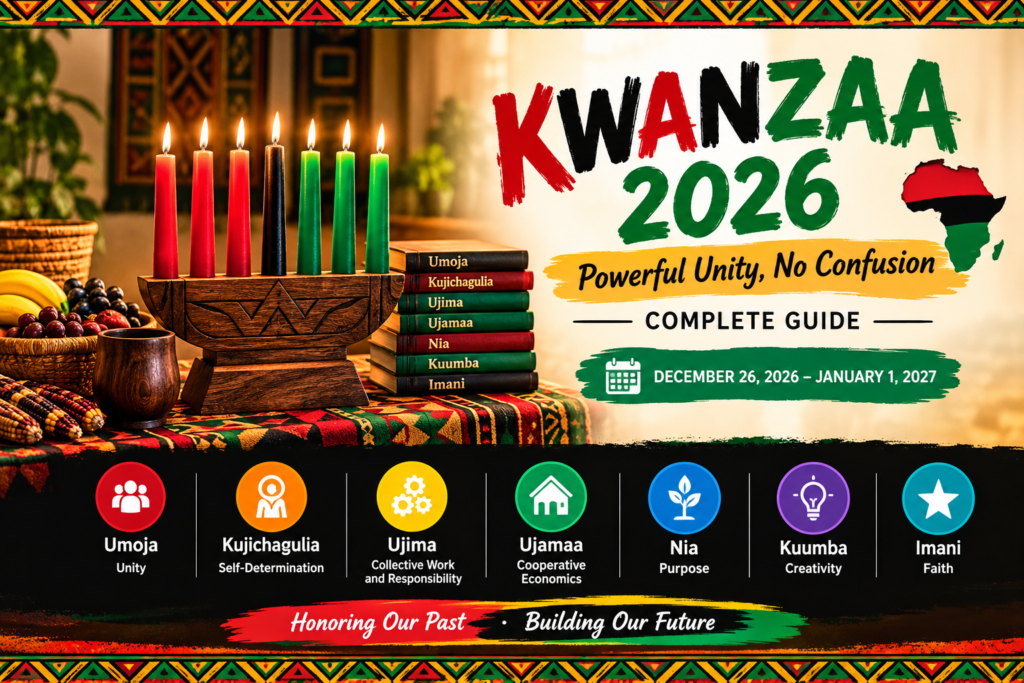
Kwanzaa 2026 is a seven-day celebration of African heritage, family, community and shared values. It falls right after Christmas, so many households fit it into a busy holiday week. This guide covers the exact dates, the history, the seven principles, the symbols, the candle-lighting ritual, the Karamu feast and practical ideas for celebrating with your family or community.
Quick answer: Kwanzaa 2026 begins on Saturday, December 26, 2026, and ends on Friday, January 1, 2027. This seven-day African American and Pan-African cultural celebration honors family, community, culture and the seven principles known as the Nguzo Saba.
Looking for more December dates? Browse the full list of upcoming days and events on our blog.
When Is Kwanzaa 2026?
- Start date: Saturday, December 26, 2026
- End date: Friday, January 1, 2027
- Duration: Seven days
- Observed: Every year, on the same dates
- Purpose: To celebrate African heritage, family, community and cultural values
Kwanzaa starts the day after Christmas and runs through New Year’s Day. It is a cultural holiday, not a religious one, so people of many faiths take part. If you are planning the whole season, our Christmas 2026 guide covers December 25.
What Is Kwanzaa?
Kwanzaa is a cultural celebration rooted in African American and wider Pan-African heritage. It gives families and communities a dedicated week to reflect on shared values, honor ancestors, appreciate culture and look ahead with purpose.
Observance usually combines a few elements:
- Daily discussion of one guiding principle
- Lighting a candle each evening
- Storytelling, music, poetry and dance
- Shared meals, especially the feast on December 31
- Gifts that encourage learning and creativity
Practices differ from one household to the next. Some families follow every tradition, while others choose the parts that fit their lives. Both approaches are part of how Kwanzaa is lived today.
History of Kwanzaa
Who Created Kwanzaa?
Dr. Maulana Karenga, a professor and activist, created Kwanzaa in 1966, during the Black Freedom Movement in the United States. He wanted a celebration that affirmed African heritage and helped Black families and communities strengthen their cultural identity. You can read more about his background on his Wikipedia page.
Why Was Kwanzaa Created?
Kwanzaa was built around a few core aims:
- Reaffirming African cultural heritage
- Strengthening family and community bonds
- Encouraging collective responsibility and self-determination
- Teaching and reinforcing the seven principles, the Nguzo Saba
What Does the Word Kwanzaa Mean?
The name comes from the Swahili phrase matunda ya kwanza, meaning “first fruits.” The phrase connects to ancient African harvest celebrations, which gave Kwanzaa its theme of gratitude for the results of shared work. The spelling with a final extra “a” gives the word seven letters, echoing the seven principles.
What Are the Seven Principles of Kwanzaa?
The seven principles of Kwanzaa, called the Nguzo Saba in Swahili, are the heart of the holiday. One principle is observed each day, and families use it as a prompt for conversation and action.
| Day and date | Principle | Meaning |
|---|---|---|
| Day 1: Dec. 26 | Umoja (Unity) | Maintaining unity within family, community and the wider African community. |
| Day 2: Dec. 27 | Kujichagulia (Self-Determination) | Defining and speaking for oneself. |
| Day 3: Dec. 28 | Ujima (Collective Work and Responsibility) | Working together to solve community problems. |
| Day 4: Dec. 29 | Ujamaa (Cooperative Economics) | Supporting and building community-owned businesses and shared prosperity. |
| Day 5: Dec. 30 | Nia (Purpose) | Working toward collective community development. |
| Day 6: Dec. 31 | Kuumba (Creativity) | Contributing creatively to make the community better. |
| Day 7: Jan. 1, 2027 | Imani (Faith) | Believing in people, community and the value of collective effort. |
How Families Reflect on Each Principle
The principles work best when they become part of everyday conversation. On any given day, a family might:
- Read the day’s principle aloud and ask everyone what it means to them
- Share a story about a time someone showed that value
- Set one small goal, such as supporting a local business on Ujamaa day
- Write down a personal commitment and revisit it on January 1
What Are the Seven Symbols of Kwanzaa?
Kwanzaa has seven basic symbols. Each one represents a part of African heritage, family or community life, and families usually arrange them together on a table.
| Symbol | Meaning |
|---|---|
| Mazao (Crops) | The harvest, productive work and the rewards of collective effort. |
| Mkeka (Mat) | Tradition and history as the foundation for community life. |
| Kinara (Candleholder) | Ancestry and roots. |
| Muhindi (Corn) | Children and the future. |
| Mishumaa Saba (Seven Candles) | The seven principles of Kwanzaa. |
| Kikombe cha Umoja (Unity Cup) | Unity and shared community bonds. |
| Zawadi (Gifts) | Commitments, love and encouragement, especially between parents and children. |
What Do the Kwanzaa Colors Mean?
Kwanzaa uses three colors, connected to the Pan-African flag:
- Black: The people
- Red: The struggle and sacrifices of the past
- Green: Hope and the future
You will see them in candles, cloth, banners and table decorations. The Pan-African flag has its own history, which is worth sharing with children.
How Is Kwanzaa Celebrated?
Celebrations blend reflection, cultural learning, family time and community events. The practices below are common, not required.
Lighting the Kinara Candles
The kinara holds seven candles: one black in the center, three red on the left and three green on the right. On the first evening, the black candle is lit and the principle of Umoja is discussed. Each following evening, one more candle is lit, alternating between the red candles on the left and the green candles on the right. By January 1, all seven are burning.
Many families make candle lighting a daily ritual. Someone reads the day’s principle, a child may light the candle, and everyone shares a thought before dinner.
Setting Up a Kwanzaa Display
A typical display sits on a table covered with the mkeka. The kinara goes in the center, with the crops, corn, unity cup and gifts arranged around it. The display makes a good visual aid for explaining each symbol, especially to children. Keep it simple, since a handful of items arranged with care carries the meaning.
Sharing Stories, Poetry and Music
Storytelling is central to Kwanzaa. Families read African and African American literature, play music, recite poetry, dance and talk about their own histories. Older relatives can pass down stories while younger ones ask questions, which keeps memory and culture alive across generations.
Giving Meaningful Gifts
Zawadi, or gifts, are traditionally meaningful rather than extravagant. Books, art supplies, instruments and heritage-related items are popular because they encourage learning and creativity. Many families also give handmade gifts. Our shopping and gift guides can help if you want more ideas.
What Is the Kwanzaa Feast (Karamu)?
The Karamu is a communal feast, traditionally held on December 31, the sixth day of Kwanzaa. It brings families and communities together to share food, music, stories and gratitude. The program often includes a welcome, cultural performances, a libation or remembrance of ancestors, and a toast to unity.
Food is part of the cultural story. Menus often draw on African, Caribbean, Southern and other Pan-African traditions, and hosts adapt them to their guests. Possible dishes include:
- Rice and beans
- Collard or other greens
- Sweet potatoes
- Cornbread
- Stews and gumbo
- Fresh fruit and desserts
No single menu is required. The goal is to share a meal that means something to the people at the table, with attention to dietary needs. For recipe inspiration, visit our food and celebrations section. Since the Karamu falls on New Year’s Eve, you can also check our upcoming days and events page for other plans that evening.
Kwanzaa 2026 Celebration Ideas for Families and Communities
Kwanzaa 2026 Activities for Families
- Light the candle for the day and discuss its principle
- Talk about how that principle shows up in your family life
- Share family stories, photographs or recipes
- Read a book together or give an educational gift
- Cook and share a meal as a household
For more seasonal ideas, see our family and lifestyle articles.
Kwanzaa 2026 Activities for Children
- Make a poster explaining the seven principles
- Build a paper kinara or a display of the seven symbols
- Read age-appropriate books about African American history and culture
- Write a short reflection on unity, creativity or purpose
- Explore African and African American music, art and storytelling
Community and Workplace Activities
- Attend a public Kwanzaa event or cultural program
- Hold a discussion about community service and cooperative economics
- Support Black-owned businesses and local cultural organizations
- Host a respectful educational event with knowledgeable community members
Kwanzaa 2026 Greetings, Wishes and Messages
Use these in cards, social posts or newsletters. For holiday messages beyond Kwanzaa, see our Christmas 2026 wishes and greetings.
Short Kwanzaa 2026 Greetings
- “Wishing you a meaningful Kwanzaa filled with unity, purpose and joy.”
- “May the seven principles inspire strength and connection in your community.”
- “Happy Kwanzaa! May this season bring reflection, creativity and hope.”
Kwanzaa 2026 Messages for Family and Friends
- “May each day of Kwanzaa bring chances to learn, grow and strengthen the bonds we share.”
- “Wishing your family a joyful Kwanzaa filled with meaningful traditions, shared stories and community spirit.”
- “May the principles of Kwanzaa encourage us to work together and build a brighter future.”
What Is the Traditional Kwanzaa Greeting?
The traditional greeting is “Habari gani?”, Swahili for “What is the news?” The reply is the principle of the day. On December 26, for example, the answer is “Umoja.”
Kwanzaa vs. Christmas: What’s the Difference?
Kwanzaa and Christmas are separate holidays. Christmas is a Christian religious holiday observed on December 25. Kwanzaa is a cultural celebration created in 1966 and observed from December 26 to January 1. Because Kwanzaa is not tied to one faith, many families celebrate both, and many others observe only one.
Kwanzaa Facts You Should Know
- Kwanzaa was created in 1966 by Dr. Maulana Karenga.
- It runs every year from December 26 through January 1.
- The name comes from a Swahili phrase meaning “first fruits.”
- Its seven principles are called the Nguzo Saba.
- The kinara holds seven candles.
- Black, red and green are the holiday’s colors.
- The Karamu feast is commonly held on December 31.
- Kwanzaa is a cultural celebration, not a religion-specific holiday.
- Families may celebrate Kwanzaa alongside Christmas or other holidays.
Frequently Asked Questions About Kwanzaa 2026
When is Kwanzaa 2026?
Kwanzaa begins on Saturday, December 26, 2026, and ends on Friday, January 1, 2027.
What are the seven principles of Kwanzaa?
They are Umoja (Unity), Kujichagulia (Self-Determination), Ujima (Collective Work and Responsibility), Ujamaa (Cooperative Economics), Nia (Purpose), Kuumba (Creativity) and Imani (Faith).
Who created Kwanzaa?
Dr. Maulana Karenga created Kwanzaa in 1966 to celebrate African heritage and strengthen family, community and cultural values.
What does Kwanzaa mean?
The name comes from the Swahili phrase matunda ya kwanza, meaning “first fruits.”
How long does Kwanzaa last?
Kwanzaa lasts seven days, from December 26 through January 1 each year.
What are the colors of Kwanzaa?
Black, red and green, representing the people, their struggle and hope for the future.
What is a kinara?
The kinara is the candleholder used during Kwanzaa. It holds the seven candles tied to the seven principles.
What is the Karamu feast?
The Karamu is a communal feast commonly held on December 31, where people share food, culture and community.
Can people celebrate both Christmas and Kwanzaa?
Yes. Kwanzaa is a cultural celebration rather than a religion-specific holiday, and some families celebrate it alongside Christmas or other observances.
Countdown to Kwanzaa 2026
Saturday, December 26, 2026
Kwanzaa begins and continues through January 1, 2027.
71 days to go (calculated from October 16, 2026)
Planning ahead? Explore more guides on our blog as the holiday season approaches.