
Staying Connected on Group Trips
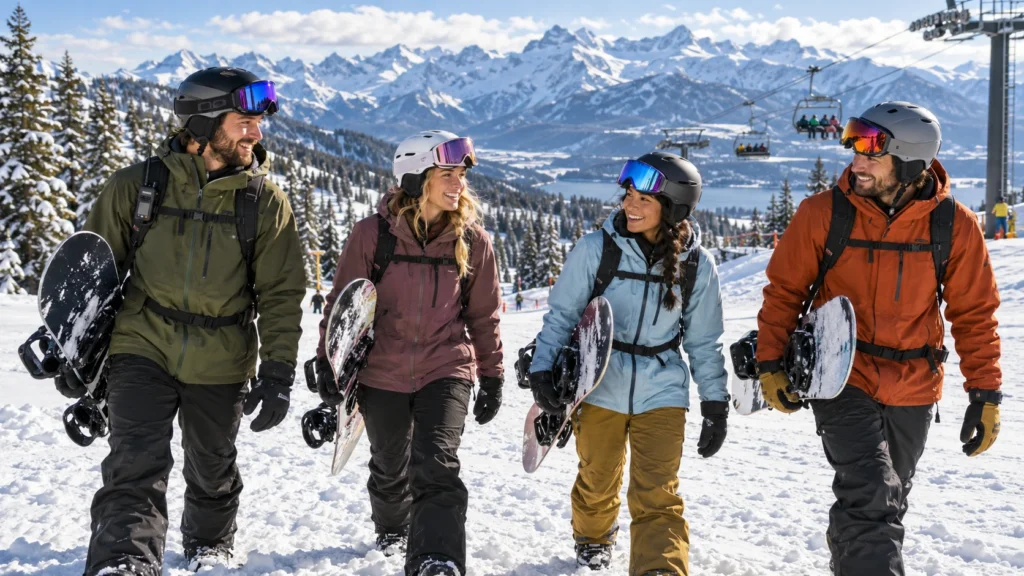
Every group trip has a moment when the plan starts to unravel. Someone stops for a photograph. Someone else takes the next trail junction. At a ski resort, half the group heads for another run while the rest decide it is time for lunch.
Usually, nobody is very far away. The difficulty is letting everyone know what has changed.
Whether you are planning a Memorial Day hiking weekend or a winter holiday on the slopes, a little preparation makes these moments easier to manage. A shared plan, sensible meeting points, and communication equipment suited to the trip can keep small changes from taking over the day.
Make a Communication Plan Before You Leave
The best time to work out how your group will stay in touch is while everyone is still together.
Before leaving the trailhead, campsite, or resort accommodation, agree on a few basics:
- Where you are going and which route you expect to follow.
- Where the group will meet for breaks or lunch.
- When everyone should check in.
- What to do if someone wants to turn back or finish early.
- Where to regroup if you cannot reach one another.
Choose meeting points that are easy to identify. “The main trailhead information board” is more useful than “near the parking lot.” At a mountain resort, use the name of a particular lift or lodge, especially if there are several base areas.
Give everyone access to the plan. Download maps beforehand and save essential details somewhere they can be opened without an internet connection. If one person holds all the information on their phone, the rest of the group has little to work with when that person is out of reach.
Match Your Equipment to the Day You Have Planned
A short walk near town and a full day in the mountains place different demands on your equipment.
Phones are useful for maps, photographs, messages, and calls wherever coverage is available. Two-way radios can add a convenient way to speak to nearby companions without making a call or opening a messaging app.
Their usefulness depends on the surroundings. A ridge, a deep valley, or the shape of a ski area can interrupt communication. Advertised maximum range tells you little about whether two people will hear each other on opposite sides of a mountain.
Think about the places where you expect to use your radios: along a wooded trail, around a campsite, between a lodge and nearby slopes, or on an exposed route. That gives you a better starting point than choosing the largest range figure on the box.
On Hiking Trips, Keep Communication Within Reach
Groups naturally stretch out on a trail. Some people climb quickly; others take more breaks or spend longer enjoying the view.
Regular regrouping points help everyone stay involved in the day. Stop before important junctions, check that everyone knows the next section, and agree on any route changes together.
Radios can make brief exchanges easier when companions are nearby but out of sight. A quick message about a rest stop or a muddy section is often more practical than taking out a phone and typing.
When considering how to choose a walkie talkie for trekking with friends, pay attention to weight, battery life, weather resistance, and straightforward controls. Equipment that feels convenient at home may become frustrating after several hours of carrying and using it.
Placement matters, too. Keep the radio secure and accessible so that answering does not require unpacking a bag. Before setting off, check that everyone can hear an incoming message and knows how to reply.
On Snowboarding Trips, Think About Gloves, Weather, and Movement
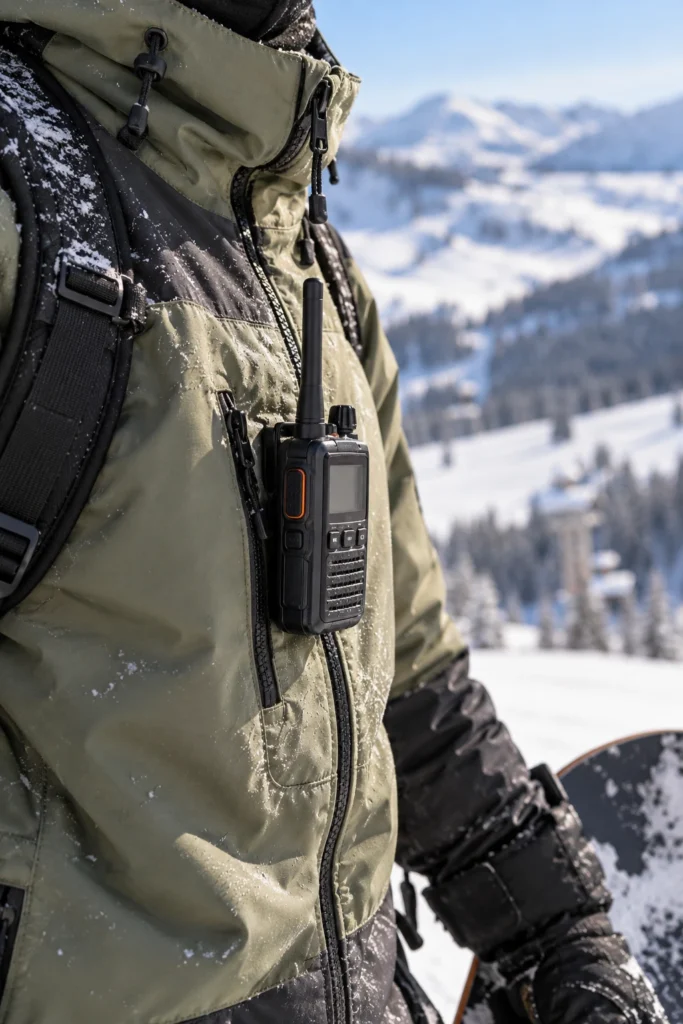
At a winter resort, your group may split between different lifts, slopes, and break spots several times in a morning.
Agreeing on the next meeting point before each split makes those changes easier. Name the lift or lodge, give a time, and make sure everyone has heard the arrangement.
Radio controls deserve particular attention in winter. A button that is easy to press with bare fingers may be awkward in gloves. A loose attachment can let the device swing around, while an inconvenient pocket makes every conversation a chore.
A useful starting point is knowing what to look for in a walkie talkie for snowboarding trips. Consider how the radio attaches to your clothing, how easily you can operate it, and how you will manage its battery during a cold day.
Test the arrangement while wearing your actual jacket, gloves, and helmet. Make sure you can hear and answer comfortably. Stop somewhere appropriate before adjusting equipment or having a conversation that needs your attention.
Set Up Your Radios Before the Holiday Begins
The trailhead or lift queue is an inconvenient place to discover that nobody knows how the radios work.
Charge each device, check its condition, and test communication before departure. Confirm that everyone understands the basic controls and that the radios can communicate with one another. If you use different models, check compatibility instead of assuming matching channel numbers are enough.
Programmable radios require extra preparation. For owners researching their equipment, a practical Baofeng frequency guide for your radio model can provide background for understanding its settings. Check the manufacturer’s instructions and the requirements that apply at your destination before transmitting; an available setting is not, by itself, permission to use it.
Once the equipment is ready, have everyone make a short test call. Include anyone who is less familiar with radios. A two-minute practice session can reveal a muted speaker, an unfamiliar control, or a microphone being held too far away.
Keep Messages Short and Specific
Clear messages save time, especially when several people are listening.
Start by identifying whom you are calling and who is speaking. Then give one useful piece of information:
“Alex, this is Sam. We’re waiting beside the trail junction sign.”
“We’re heading to the base lodge for lunch. Meet us by the main entrance at twelve thirty.”
Pause after pressing the talk button before speaking, and release it when you finish. Give the other person time to answer.
For a change of plan, ask for a brief confirmation. Hearing “Understood, twelve thirty at the main entrance” is much more reassuring than assuming that silence means everyone received the message.
Have a Plan for When You Cannot Make Contact
There will be times when a message does not get through. A battery may run low, a phone may lose coverage, or the terrain may block a radio signal.
Agree in advance how long to wait and what to do next. Depending on the outing, that might mean staying at the last agreed meeting point or following a clearly defined return plan. Avoid leaving people to invent different solutions once they are already separated.
For remote outings, make emergency communication arrangements appropriate to the route. A radio used to talk to friends does not establish a connection to emergency services.
The most useful communication habits are simple enough to keep using throughout the holiday: check in before splitting up, name a meeting place, confirm changes, and keep equipment accessible. Once everyone knows the routine, there is more time to enjoy the trail, the snow, and the people you came with.