
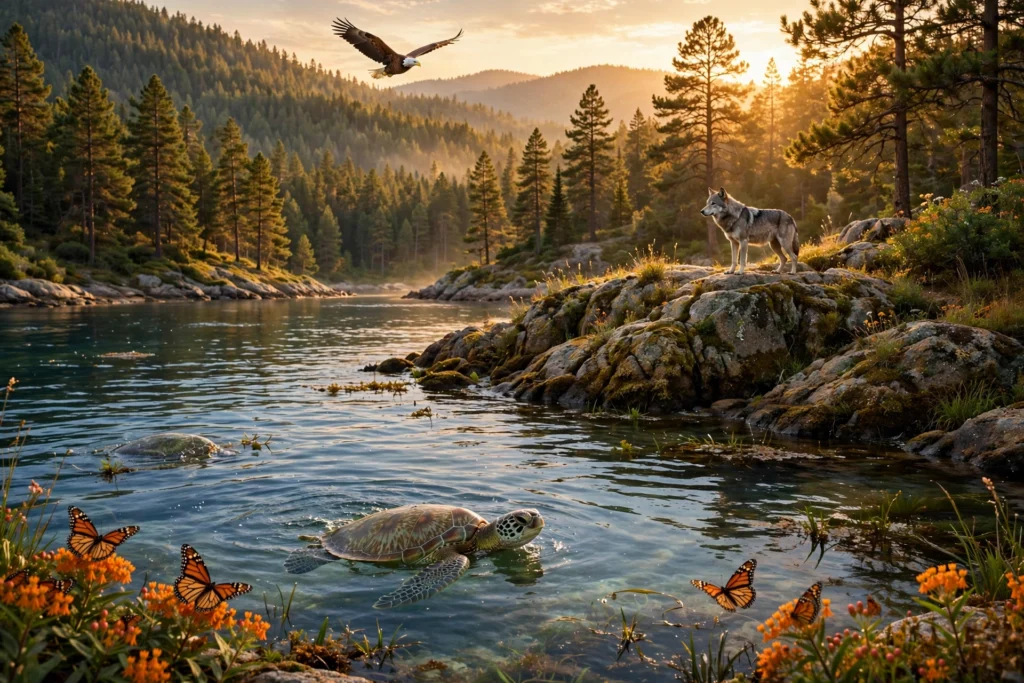
Endangered Species Day 2027 falls on Friday, May 21, 2027, the third Friday in May. It is the 22nd annual observance of a global day of action that celebrates wildlife comebacks, teaches people about species on the edge of extinction and asks everyone to do one practical thing to help. It is not a public holiday and no offices close, but zoos, aquariums, wildlife refuges, schools, libraries and parks across the United States mark it with events, and the day has spread far beyond American borders since the United States Senate created it in 2006.
Countdown to Endangered Species Day 2027
Loading…
until Friday, May 21, 2027 at 12:00 AM Eastern Time
When Is Endangered Species Day 2027?
Endangered Species Day 2027 is on Friday, May 21, 2027. The date moves every year because the rule is the third Friday in May, not a fixed calendar date. In 2026 it fell on May 15, and in 2028 it will fall on May 19.
How many days until Endangered Species Day 2027?
From today, November 24, 2026, there are 178 days remaining until Endangered Species Day 2027. The countdown timer at the top of this page ticks down live to midnight at the start of Friday, May 21, 2027, Eastern Time, so you can check the exact days, hours, minutes and seconds left at any moment.
| Year | Date | Weekday |
|---|---|---|
| 2025 | May 16, 2025 | Friday |
| 2026 | May 15, 2026 | Friday |
| 2027 | May 21, 2027 | Friday |
| 2028 | May 19, 2028 | Friday |
| 2029 | May 18, 2029 | Friday |
| 2030 | May 17, 2030 | Friday |
What Is Endangered Species Day?
Endangered Species Day is an annual day of action to protect threatened and endangered wildlife. It is organised by the Endangered Species Coalition, a US based network of conservation organisations, and it has grown into a worldwide event with hundreds of activities each year. Zoos, aquariums, national wildlife refuges, botanic gardens, schools, libraries, museums and community groups hold walks, talks, clean ups, film screenings, habitat restoration projects and classroom lessons.
The day has two purposes that sit side by side. The first is celebration: the Endangered Species Act has kept species alive that would otherwise be gone, and the day is a chance to tell those comeback stories. The second is a warning: thousands of species are still sliding toward extinction, and the day asks people to learn the threats and take one concrete step, whether that is planting native flowers, donating, volunteering or writing to an elected representative.
It is an awareness day, not a federal holiday. Schools, businesses and government offices stay open, which is part of the point: the organisers want the day woven into ordinary life, in classrooms and workplaces, rather than set apart as a day off.
The History: From the Endangered Species Act to the Senate Floor
The story starts with the law the day celebrates. The Endangered Species Act was signed by President Richard Nixon on December 28, 1973. It passed with overwhelming bipartisan support: 92 to 0 in the Senate and 390 to 12 in the House of Representatives. The Act made it illegal to harm, harass or kill listed species and required the government to protect the habitat they need to recover. It is widely described as one of the strongest wildlife protection laws in the world, and it covers fish, wildlife and plants, both in the United States and abroad.
More than thirty years later, the Endangered Species Coalition proposed a day to mark what the Act had achieved and what was still at stake. The idea was taken up in the Senate by Senator Dianne Feinstein of California, with bipartisan co-sponsors including Senators Susan Collins, Hillary Clinton, Joe Biden and Lincoln Chafee. The Senate unanimously passed Resolution 431, designating May 11, 2006 as the first ever Endangered Species Day. The resolution encouraged the people of the United States to become educated about threats to species, to learn the success stories of recovery and to promote species conservation worldwide.
The first observance was a Thursday, May 11, 2006. From the following year the day settled onto its permanent rule, the third Friday in May, which is why the 2027 date is May 21. The Endangered Species Coalition has organised it every year since, and the day is now marked internationally, with events as far away as New Zealand. The 2027 observance is the 22nd annual Endangered Species Day.
Endangered vs Threatened: What the Labels Mean
Two words do most of the work in American conservation law, and they are easy to mix up:
- Endangered means a species is in danger of extinction throughout all or a significant part of its range. The bald eagle was endangered before its recovery.
- Threatened means a species is likely to become endangered in the foreseeable future. It is a warning stage, and protection at this stage is often what keeps a species from sliding further.
- Candidate species are those the US Fish and Wildlife Service has found warrant listing but has not yet formally listed, often because of a backlog of decisions.
- Delisted species have been removed from the list, usually because they recovered, though some are removed because they went extinct or because new information showed the original listing was mistaken.
The US Fish and Wildlife Service manages most listings, while NOAA Fisheries manages marine species such as whales, sea turtles and salmon. A single species can appear more than once on the list when separate populations are listed on their own, which is why counts of listings and counts of species are not the same number.
The Numbers: How Many Species Are at Risk?
The figures behind Endangered Species Day 2027 are sobering, and they are also the best argument that the day works:
| Measure | Figure | Source |
|---|---|---|
| Plants and animals protected under the Endangered Species Act | About 1,682 | Center for Biological Diversity study, January 2026 |
| US animal listings under the Act | 743 (495 endangered, 248 threatened) | US Fish and Wildlife Service ECOS boxscore |
| Total US listings including plants | About 1,680 | US Fish and Wildlife Service ECOS boxscore |
| Listed species saved from extinction | 99 percent | US Department of the Interior |
| Species recovered and delisted | More than 50 | The Nature Conservancy |
| US animal species rated threatened by the IUCN Red List | 1,233 | IUCN Red List |
| US animal species recorded as extinct | 230 | IUCN Red List |
| Species declared extinct by USFWS in 2023 | 21, including Bachman’s warbler and eight freshwater mussels | US Fish and Wildlife Service |
| Americans who support the Endangered Species Act | 84 percent | Conservation Biology Institute, January 2026 |
Scientists say the protected list is only part of the picture. A peer reviewed study published in January 2026 found that 2,204 more species in the United States should be considered for protection under the Act, roughly double the number currently listed, and that the Fish and Wildlife Service faces a backlog of more than 400 species awaiting protection decisions. The agency has listed an average of just 32 species a year since 1973. That gap between what science says needs protection and what the law currently covers is exactly what Endangered Species Day asks the public to notice.
Why Species Become Endangered
Species rarely decline for a single reason. The same January 2026 study identified the main threats facing the species that need protection:
- Habitat destruction: a threat for 92 percent of the species needing consideration. Wetlands drained, forests cleared, grasslands ploughed and rivers dammed leave wildlife with nowhere to live or breed.
- Invasive species: a threat for 33 percent. Non native predators, competitors and diseases can overwhelm species that never evolved defences against them.
- Climate change: a threat for 18 percent, and rising. Shifting temperatures, sea level rise and changing rainfall move the conditions a species depends on faster than it can adapt.
- Pollution: pesticides, plastics, oil and chemical runoff poison food chains. The bald eagle nearly vanished largely because of DDT contamination before the chemical was banned in 1972.
- Poaching and wildlife trade: illegal hunting and collecting still drive declines in elephants, rhinos, pangolins, parrots and many reptiles and orchids.
Seven Comeback Stories That Prove Recovery Works
The strongest case for the Endangered Species Act is the list of species that came back from the edge. These seven are the stories told every year on Endangered Species Day:
1. Bald eagle: delisted 2007
America’s national symbol was in danger of extinction across most of its range by the mid 1900s, hit by habitat loss, illegal shooting and DDT contamination of its food. Habitat protection under the Act, the banning of DDT and public conservation work brought it back. It was removed from the endangered species list on August 8, 2007, and sightings are now common in nearly every state.
2. American peregrine falcon: delisted 1999
The peregrine falcon was another DDT casualty, with eastern populations wiped out by the 1960s. Captive breeding and reintroduction, plus the DDT ban, rebuilt the population. It was delisted on August 25, 1999.
3. American alligator: delisted 1987
Once hunted almost to extinction for its hide, the American alligator recovered under protection and was removed from the endangered list in 1987. It is now one of the classic examples of a species saved by the Act.
4. Kirtland’s warbler: delisted 2019
This small yellow bellied songbird nests only in young jack pine forests in Michigan, Wisconsin and Ontario. Listed in 1973, it fell to about 170 breeding pairs in the 1970s and 1980s, squeezed by habitat loss and by brown headed cowbirds laying eggs in its nests. Controlled burns, replanting and cowbird control rebuilt the population to about 2,300 breeding pairs, and it was delisted on November 8, 2019, exceeding its recovery plan goals.
5. Brown pelican: delisted 2009
The brown pelican, Louisiana’s state bird, was nearly wiped out by DDT. After the pesticide ban and decades of protection, the population recovered enough to be removed from the list in December 2009.
6. Aleutian Canada goose: delisted 2001
Introduced foxes on its Aleutian Island nesting grounds drove this goose to the brink. Fox removal and captive breeding brought it back, and it was delisted on March 20, 2001.
7. Humpback whale: delisted 2016
Commercial whaling cut humpback numbers to a fraction of their former abundance. The international whaling moratorium and protection under the Act allowed most populations to rebound, and in 2016 NOAA removed most humpback whale populations from the endangered list.
Not every story ends well. In 2023 the Fish and Wildlife Service declared 21 species extinct, including Bachman’s warbler and eight freshwater mussels, most of which were probably already gone before they were listed. The contrast is the point of the day: recovery works when protection comes in time, and it cannot come too late.
15 Ways to Help on Endangered Species Day 2027
You do not need a biology degree or a big donation to take part. Pick one of these and do it on Friday, May 21, 2027:
- Learn one listed species near you. Look up which threatened or endangered species live in your state or county, learn why each was listed, and tell one other person about it.
- Join a local event. The Endangered Species Coalition keeps an interactive map of registered events. Search for walks, talks, clean ups and workshops near you, or register your own activity.
- Enter the Chalk Art Contest. The Coalition’s nationwide chalk art competition invites all ages to draw endangered species on pavements and sidewalks. It is a simple, visual way to start conversations in your neighbourhood.
- Plant a pollinator garden. Native wildflowers give bees, butterflies and hummingbirds food and shelter. Even a window box helps, and it connects this day to World Bee Day 2027, the day before.
- Visit a zoo, aquarium or wildlife refuge. Many hold special Endangered Species Day programmes, and admission and donations fund breeding and habitat work directly.
- Adopt a species. Symbolic adoptions through conservation charities fund field work for a chosen animal, and they make a good gift for a child.
- Donate to a conservation group. Even a small gift helps. Check that the organisation publishes how it spends donations before you give.
- Contact your elected representatives. A short message asking them to support habitat protections and wildlife funding carries weight, especially on a day when many people write at once.
- Volunteer for habitat work. Refuges, parks and land trusts run planting, invasive species removal and clean up days all spring. Sign up for one near you.
- Record what you see. Citizen science apps such as iNaturalist turn a walk into useful data. Your sightings help researchers track where species are and how they are doing.
- Cut single use plastic. Plastic waste kills seabirds, turtles and marine mammals. A reusable bottle and bag are small habits with a direct link to the species in this article’s photograph.
- Choose wildlife friendly products. Look for certified sustainable seafood and wood, and avoid products made from endangered species, including ivory, tortoiseshell and some exotic leathers.
- Teach a child. Read a book about an endangered animal together, watch a documentary, or draw a favourite species and talk about where it lives and what it needs.
- Share the day online. Post a fact or a photo with the hashtag #EndangeredSpeciesDay and tag a local conservation group so the message reaches people who can act on it.
- Make it a habit, not a day. The species on the list need habitat, funding and attention all year. Set a monthly reminder to check one conservation news story or support one local project.
What Is the 2027 Theme?
As of November 24, 2026, the Endangered Species Coalition has not yet announced a theme for Endangered Species Day 2027. Themes and event details are published on the Coalition’s official Endangered Species Day page closer to the date, and this article will be updated when the 2027 theme is announced. Check endangered.org in spring 2027 for the latest event map, lesson plans and the chalk art contest details.
Endangered Species Day for Kids and Classrooms
Teachers use the day widely because it turns an abstract problem into animals children already care about. The Coalition publishes free lesson plans and curriculum guides for kindergarten through grade 12, and many zoos and museums run school programmes around the third Friday in May. Good classroom activities include adopting a class species to follow for a term, drawing a food web to show how one extinction ripples outward, and building a pollinator garden in a school bed. The day also falls in the same week as the International Day for Biological Diversity on May 22, so teachers often pair the two into a full week of nature lessons.
Quotes About Saving Endangered Species
Four lines worth sharing on the day:
- “In the end we will conserve only what we love; we will love only what we understand; and we will understand only what we are taught.”, Baba Dioum, Senegalese conservationist, 1968
- “In nature, nothing exists alone.”, Rachel Carson, Silent Spring, 1962
- “What you do makes a difference, and you have to decide what kind of difference you want to make.”, Jane Goodall
- “An understanding of the natural world is a source of not only great curiosity, but great fulfilment.”, Sir David Attenborough
Also on May 21, 2027
Endangered Species Day shares its date with several lighter observances. National Strawberries and Cream Day celebrates the classic spring dessert. National Memo Day is a nudge to write the note you have been putting off. National Waiters and Waitresses Day thanks the people who serve our meals. National Pizza Party Day also falls on the third Friday in May, so in 2027 it lands on the same day. The United Nations also marks May 21 as the World Day for Cultural Diversity for Dialogue and Development. And the very next day, Saturday, May 22, 2027, is the International Day for Biological Diversity, a natural companion to this one.
Other May 2027 days on this site: World Bee Day 2027 (May 20), Mother’s Day 2027 (May 9) and the Memorial Day 2027 guide (May 31). For more wildlife days, see Earth Day 2027, Arbor Day 2027, National Wildlife Day 2026, Wildlife Conservation Day 2026 and National Save the Eagles Day 2027.
Frequently Asked Questions
When is Endangered Species Day 2027?
Endangered Species Day 2027 is on Friday, May 21, 2027, the third Friday in May. It is the 22nd annual observance.
Is Endangered Species Day a federal holiday?
No. It is an awareness day, not a public holiday. Schools, businesses and government offices stay open, and events take place at zoos, refuges, schools, libraries and parks.
Who organises Endangered Species Day?
The Endangered Species Coalition, a US based network of conservation organisations, created and organises the day. It was established by the United States Senate in 2006 through Resolution 431.
How many species are endangered in the United States?
About 1,682 plants and animals are protected under the Endangered Species Act, including 743 animal listings: 495 endangered and 248 threatened. The IUCN Red List rates 1,233 US animal species as threatened by its own scientific assessment, which counts differently from the legal list.
What is the difference between endangered and threatened?
Endangered means a species is in danger of extinction throughout all or a significant part of its range. Threatened means it is likely to become endangered in the foreseeable future.
How can I participate in Endangered Species Day 2027?
Join a local event from the Coalition’s event map, enter the chalk art contest, plant native flowers, visit a zoo or refuge, donate, volunteer for habitat work or simply learn about one listed species near you and tell someone else about it.
No 2027 deals or offers are listed in this article because none were verified from official sources as of November 24, 2026. Dates and figures were checked against the Endangered Species Coalition, the US Department of the Interior, the US Fish and Wildlife Service and the IUCN Red List on that date.