
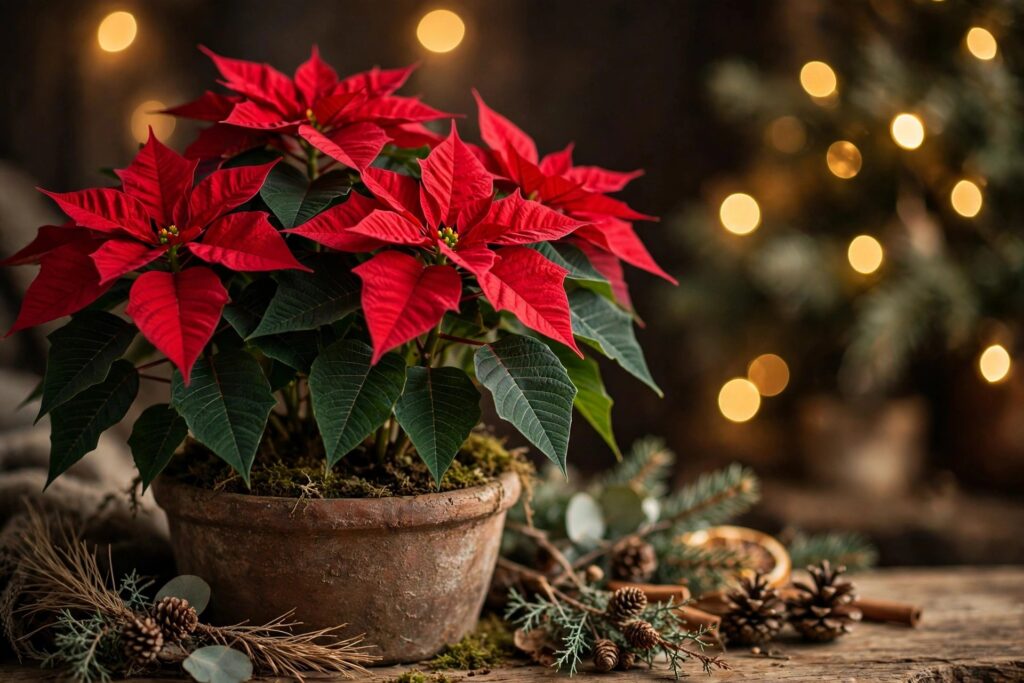
National Poinsettia Day 2026 falls on Saturday, December 12, 2026 — the same date every year. It is the day the United States celebrates the red-and-green plant that has become Christmas in plant form, and it honours the man who gave the plant its English name: Joel Roberts Poinsett, the first United States Minister to Mexico, who died on December 12, 1851.
National Poinsettia Day 2026 at a Glance
At a glance: Date — Saturday, December 12, 2026 (fixed annually on December 12). Next occurrence after 2026 — Sunday, December 12, 2027. Botanical name — Euphorbia pulcherrima. Spanish name — Flor de Nochebuena, ‘flower of the holy night’. Nahuatl name — cuetlaxochitl. Official recognition — United States House of Representatives resolution, 2002. Best known for — Christmas decoration, gifts, and the plant most associated with the December holidays in North America.
The Legend First: Pepita and the Weeds That Bloomed
Long before the poinsettia had an English name, Mexico told a story about it. A poor girl named Pepita wanted to bring a gift to the Christmas Eve service but had nothing to give. She gathered a bundle of roadside weeds, laid them before the nativity, and — in the legend — they burst into brilliant red blooms. That is why the plant is still called the Christmas Eve flower in Mexico, and why its Spanish name, Flor de Nochebuena, means flower of the holy night. The story is a legend, not documented history, but it explains why the plant and Christmas Eve have been linked in Mexico since long before it reached the United States.
The Documented History: From Taxco to Every American Living Room
The plant itself is older than either story. In Mexico it grew wild in the south, around Taxco in present-day Guerrero. The Aztecs knew it as cuetlaxochitl and used its red bracts to make dye and its sap in traditional medicine. Franciscan friars in 17th-century Mexico began using it in Christmas celebrations, which fixed its place in the season.
In the late 1820s Joel Roberts Poinsett, serving as the first United States Minister to Mexico, saw the plant and sent cuttings home to his greenhouses in Charleston, South Carolina, and to botanical friends in Philadelphia. The cuttings arrived in 1828, and the plant took his name: poinsettia. Poinsett was also a botanist and a co-founder of the National Institute for the Promotion of Science, a forerunner of the Smithsonian Institution.
The plant stayed a tall, leggy curiosity until the 20th century, when the Ecke family of California — first Paul Ecke Sr., then Paul Ecke Jr. — developed compact, bushy varieties and the propagation techniques that made mass production possible. Their promotion, including giving plants to television studios for holiday broadcasts, turned the poinsettia into the best-selling potted plant of the American holiday season. In 2002 the House of Representatives formally recognised December 12 as National Poinsettia Day, honouring both Poinsett, whose death anniversary it is, and Paul Ecke Jr.’s role in building the modern industry.
A Botanical Correction Most People Miss
The red parts of a poinsettia are not petals. They are bracts — modified leaves that turn colour as the days shorten. The true flowers are the tiny yellow clusters, called cyathia, in the centre. That is why a healthy plant is judged by its centre, not just its colour: look for tight, unopened yellow buds rather than plants already shedding pollen. Modern breeding has also widened the palette far beyond red: today you can find white, pink, marbled, apricot and deep burgundy varieties, though classic red still dominates December sales.
How to Choose One That Lasts Until Christmas — and Beyond
Use this checklist in the shop, not just the colour test: (1) Leaves and bracts should be full and unblemished, with no yellowing or drooping. (2) The soil should be slightly moist, not soaking or bone dry. (3) The yellow centre flowers should be mostly closed. (4) The plant should not be sitting in a puddle — standing water is the fastest way to kill it. (5) On a cold day, carry it home wrapped in paper or a sleeve: poinsettias are tropical plants and a short blast of cold air on the way to the car can make leaves drop within days.
Keeping It Alive: The Five Rules That Matter
Light: bright, indirect light for at least six hours a day, such as near a sunny window with a sheer curtain. Direct midday sun can scorch the bracts.
Temperature: steady 65–70°F (about 18–21°C) during the day, slightly cooler at night. Keep it away from cold drafts, exterior doorways, fireplaces, radiators and heating vents, and never below 50°F.
Water: water thoroughly only when the soil surface feels dry, let it drain fully, and always empty the saucer or decorative cover — roots sitting in water rot quickly. While it is in bloom it needs no fertiliser.
After Christmas: if you want to keep it as a green houseplant, prune it back in spring to about 4–6 inches, feed monthly with half-strength houseplant fertiliser, and, to re-colour it for the next Christmas, give it about 12–14 hours of complete darkness each night for six to eight weeks starting in early autumn. Reblooming takes patience and is not guaranteed, but the plant can live happily as a green houseplant for years.
Are Poinsettias Poisonous? The Myth, Corrected
The old story that poinsettias are deadly is not true, but the plant is not harmless either. Its milky sap can irritate skin, and eating leaves can cause stomach upset in people and, more noticeably, in cats and dogs — drooling, vomiting or irritation. Keep plants out of reach of pets and small children who might chew them, wash sap off skin, and seek veterinary or medical advice if a large amount is eaten. The plant deserves respect, not fear.
Seven Ways to Celebrate on December 12
- Give a poinsettia to someone who brightened your year — the plant’s traditional meaning is good cheer and celebration.
- Add one to your own holiday display, in classic red or a colour you have never tried.
- Tell the Pepita story to children, then look at a real plant together and find the tiny yellow flowers in the centre.
- Learn the plant’s Mexican roots: its Nahuatl name, cuetlaxochitl, and its place in the Christmas Eve traditions of Taxco.
- Check your plant’s health using the checklist above and move it out of any draft.
- Pair it with a December tradition: this year December 12 is also the final day of Hanukkah 2026, which ends at nightfall that Saturday.
- Share a photo of your plant with a message of good cheer — the simplest observance, and the one most people actually do.
Messages to Send on National Poinsettia Day
Short, ready-to-use lines: ‘Wishing you a season as bright as a poinsettia in full bloom.’ ‘Happy National Poinsettia Day — may your December be full of good cheer.’ ‘Like this plant, may your home be warm, bright and full of life this Christmas.’ ‘Thinking of you this holiday season — sending a little red-and-green cheer your way.’
Frequently Asked Questions
When is National Poinsettia Day 2026? Saturday, December 12, 2026. It is observed on December 12 every year.
Why December 12? It marks the death of Joel Roberts Poinsett on December 12, 1851, the man who introduced the plant to the United States in 1828.
Who was Joel Poinsett? A botanist, politician and the first United States Minister to Mexico, who sent the plant’s cuttings from Mexico to South Carolina.
What does the poinsettia symbolise? Good cheer, celebration, success and the Christmas season; in Mexico it is the flower of the holy night.
Are the red parts flowers? No — they are bracts, modified leaves. The real flowers are the tiny yellow cyathia in the centre.
How long does a poinsettia last? With bright indirect light, steady warmth and careful watering, it should stay colourful through Christmas and into January or February, and can live on as a green houseplant.
Can you keep a poinsettia after Christmas? Yes — prune in spring, feed monthly, and give long dark nights in early autumn if you want it to re-colour.
What colours do poinsettias come in? Red is classic, but white, pink, marbled, burgundy and apricot varieties are widely sold.
Is National Poinsettia Day a public holiday? No — it is an observance, not a federal holiday; shops and offices stay open.
Facts checked November 3, 2026, from the sources below; no 2026 shop offers are listed because none were verified from official retailer sources at writing.
Sources
- Farmer’s Almanac: Poinsettia legend, facts and trivia
- Ohio State Origins on Poinsettia Day
- Ohio State University Extension: Caring for poinsettias
For a cosy December at home after your celebrations, see our guide to the Best Christmas Movies.