
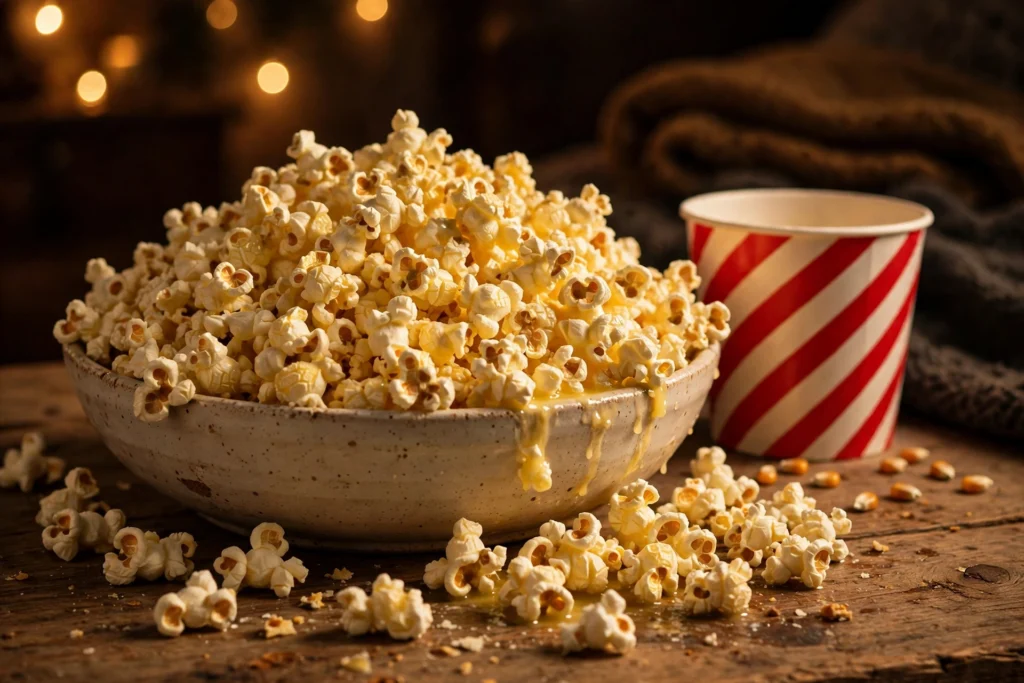
National Popcorn Day 2027 is on Tuesday, January 19, 2027. Celebrated every year on January 19, it is a day for one of America’s oldest and most loved snacks — the humble kernel that turns into a fluffy, crunchy treat with nothing more than heat. Whether you like it plain and air-popped, buttered at the movies, or dressed up with caramel and cheese, this is the day to enjoy it properly.
When Is National Popcorn Day?
National Popcorn Day falls on January 19 every year. Because the date is fixed, it never moves to a weekend — it simply lands wherever January 19 falls in the calendar. It also sits in the middle of winter, which makes it a perfect excuse for a cozy movie night at home.
| Year | Date | Day of the week |
|---|---|---|
| 2027 | January 19 | Tuesday |
| 2028 | January 19 | Wednesday |
| 2029 | January 19 | Friday |
Why January 19? The Honest Answer
Unlike some national days, National Popcorn Day has no single verified founder and no confirmed founding year. Sources disagree: some trace celebrations back to at least 1988, others note that the date shifted over the years — from October 24 to January 31 — before January 19 became the widely accepted date around 2003. The Popcorn Board, formed in 1998, helped promote a single annual date. So if you see a confident claim naming one founder, treat it with caution: the honest story is that the day grew gradually, and January 19 is the date everyone eventually settled on.
Why Does Popcorn Pop? The Science in 30 Seconds
Only one variety of corn pops: Zea mays everta. Each kernel is a tiny pressure vessel. Inside its hard outer hull sits a starchy endosperm with a small amount of moisture (around 13–14% is ideal). Heat the kernel to roughly 180°C (about 350°F) and the moisture turns to steam, pressure builds, and the hull bursts. The soft starch inside expands and cools instantly into the fluffy white flake we eat. Kernels that fail to pop — the “old maids” at the bottom of the bowl — usually had too little moisture or a cracked hull that let the steam escape early.
A Short History of Popcorn
- Thousands of years ago: Archaeologists have found evidence of popped corn in Peru dating back around 4700 BCE, and in Bat Cave, New Mexico, ears of popping corn dated to about 3600 BCE were discovered in 1948.
- 1500s: Aztec people used popcorn in ceremonies and decorations, including headdresses honoring Tlaloc, the god of maize and fertility.
- 1800s: Popcorn became a popular American street and fair snack. In 1885, Chicago candy-store owner Charles Cretors invented a steam-powered popcorn machine, and he showed it at the 1893 World’s Columbian Exposition.
- Great Depression: Popcorn’s low price made it one of the few treats families could still afford, and it helped keep movie theaters in business — a link between popcorn and the movies that has never gone away.
- 1981: General Mills received the first patent for a microwave popcorn bag, bringing popcorn into kitchens with no pot or oil needed.
- Today: Popcorn is a whole-grain snack sold everywhere from cinemas and ballparks to grocery aisles in dozens of flavors.
Is Popcorn Healthy? The Short Version
Plain popcorn is a 100% whole grain — the entire kernel, bran, germ, and endosperm, stays intact when it pops. A cup of air-popped popcorn has roughly 30–35 calories and about a gram of fiber, with almost no fat and very little sodium before you add anything. Three cups give you around 90–95 calories and about 3.5 grams of fiber. That is the good news — and the catch is the toppings. Butter, oil, caramel, and heavy salt are what turn a light snack into a heavy one, and movie-theater servings are often far larger than a home bowl. The healthiest approach is simple: air-pop it, season it lightly, and enjoy the flavor of the corn itself.
| Preparation (3 cups) | Calories (approx.) | What to know |
|---|---|---|
| Air-popped, plain | 90–95 | The lightest option |
| Oil-popped, lightly salted | About double | Still whole grain but oil adds up fast |
| Buttered / caramel-coated | Much higher | A treat, not an everyday snack |
Three Ways to Pop It at Home
- Air popper (easiest and lightest). Pour in the kernels, switch on, and season while the popcorn is still warm so the seasoning sticks. A light mist of olive oil spray helps salt and spices cling without drowning the bowl.
- Stovetop pot (best flavor). Heat a tablespoon or two of oil in a heavy pot, add three kernels as testers, and when they pop, add the rest in a single layer, cover, and shake gently until popping slows to a few seconds between pops. Take it off the heat at once — burnt popcorn happens fast.
- Microwave bag (fastest). Follow the bag’s time and listen: stop when there are 2–3 seconds between pops. Let it stand a minute before opening, and open away from your face — the steam is hot.
Whichever method you use, store unpopped kernels in an airtight container in a cool, dry place. Old, dried-out kernels pop poorly, so buy fresh kernels for the best results.
Flavor Ideas Worth Trying
Plain with sea salt is a classic for a reason, but National Popcorn Day is the day to experiment:
- Classic butter and salt
- Cheesy — finely grated Parmesan and garlic powder while warm
- Sweet and salty — honey or maple syrup with sea salt
- Spicy — smoked paprika, chili powder, and lime
- Herby — rosemary, olive oil, and black pepper
- Movie night mix — popcorn with pretzels and chocolate candies
Make a popcorn bar if friends are coming over: one big bowl of plain popcorn, small bowls of seasonings, and let everyone build their own mix.
How to Celebrate National Popcorn Day 2027
- Host a movie night
- Try a flavor you have never had
- Pop it from scratch with the stovetop method
- Share a bowl with work, school, or a neighbor
- Learn something new about popcorn’s history
- Post a photo of your bowl
Popcorn in American Life
Few snacks are as woven into American culture as popcorn. It is the smell of the cinema lobby, the snack of baseball games and county fairs, and a pantry staple in millions of homes. During the Great Depression it was affordable when almost nothing else was, and during the streaming era it has survived the move from theater seats to sofas without losing its place. That staying power — cheap, simple, shareable, and endlessly adaptable — is really what National Popcorn Day celebrates.
Popcorn Quotes and Messages for the Day
“Popcorn: proof that the simplest things are often the best.”
“Life is better with a big bowl of popcorn and a good movie.”
“Happy National Popcorn Day! May your kernels all pop and your bowl never run empty.”
“Popcorn is the only snack that applauds itself while it cooks.”
Send one with a photo of your bowl, or write it on a card tucked into a bag of popcorn for a friend.
Frequently Asked Questions
When is National Popcorn Day 2027? Tuesday, January 19, 2027; celebrated every year on January 19.
What is National Popcorn Day? A yearly celebration of popcorn — its history, its place in American culture, and the simple pleasure of eating it, usually with a movie.
Who founded National Popcorn Day? No founder is reliably established; celebrations date back to at least 1988, and January 19 became the widely accepted date around 2003.
Why does popcorn pop? Each kernel holds a little moisture inside a hard hull; heated, the moisture becomes steam, pressure builds, and the hull bursts.
Is popcorn a whole grain? Yes — the whole kernel, bran, germ, and endosperm.
How many calories are in air-popped popcorn? About 30–35 calories per cup, roughly 90–95 for three cups, before toppings.
Is there a difference between National Popcorn Day and National Popcorn Popping Month? Yes — the day is January 19; October is National Popcorn Popping Month.
Are there National Popcorn Day deals in 2027? No 2027 offers had been verified from official sources at the time of writing (November 4, 2026). Check cinema chains’ and snack brands’ official sites and apps closer to January 19, 2027.
More Days and Events to Explore
If you are planning ahead for the winter season, you may also enjoy Christmas 2026, Hanukkah 2026, Best Christmas Movies, National Brownie Day 2026, Boxing Day 2026, and Kwanzaa 2026.