
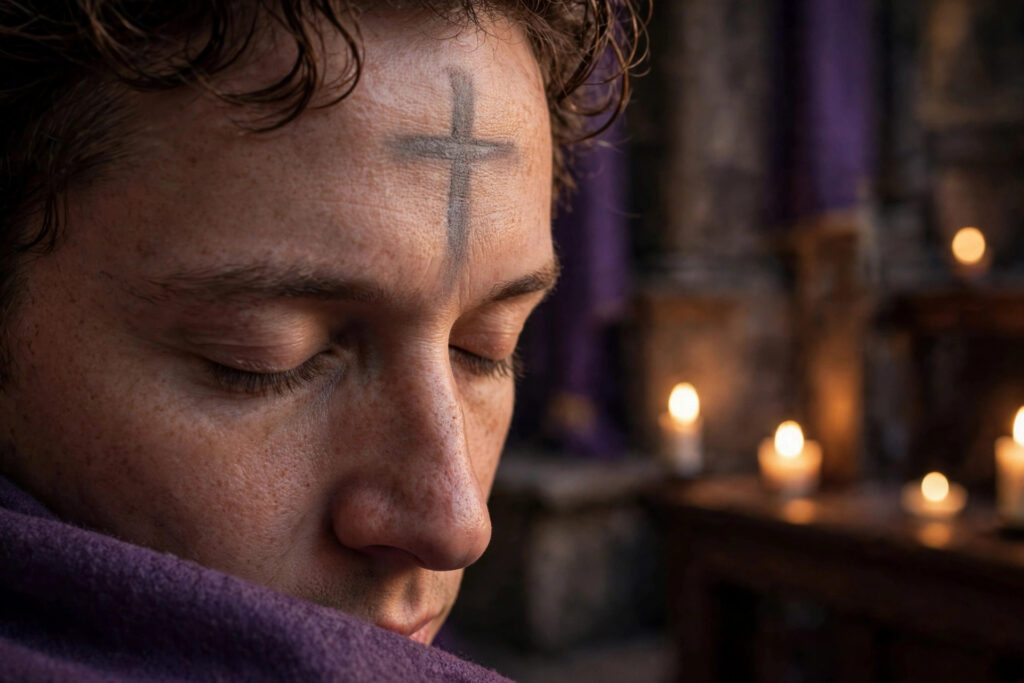
Ash Wednesday 2027 is Wednesday, February 10, 2027. It is the first day of Lent, the season of prayer, fasting, and almsgiving that prepares Christians for Easter. The date falls 46 days before Easter Sunday, which is March 28, 2027 — and the day before, Tuesday, February 9, is Mardi Gras, the last day of feasting before the fast begins.
If you are looking for the short version: go to church, receive ashes on your forehead in the shape of a cross, eat no meat, and fast — one full meatless meal plus two smaller meals that together do not equal a full meal. That is the whole day in one sentence. The rest of this guide explains why each part matters, where the traditions come from, and what the rules actually require in 2027.
When Is Ash Wednesday 2027?
Ash Wednesday 2027 falls on Wednesday, February 10, 2027. It is a movable feast, which means the date changes every year because it is tied to the date of Easter.
Ash Wednesday dates, 2027–2031
| Year | Ash Wednesday | Easter Sunday |
|---|---|---|
| 2027 | Wednesday, February 10 | Sunday, March 28 |
| 2028 | Wednesday, March 1 | Sunday, April 16 |
| 2029 | Wednesday, February 14 | Sunday, April 1 |
| 2030 | Wednesday, March 6 | Sunday, April 21 |
| 2031 | Wednesday, February 26 | Sunday, April 13 |
Note the 2029 date: in 2029, Ash Wednesday falls on February 14 — Valentine’s Day itself. In 2027 the overlap is softer but still notable: the First Sunday of Lent falls on February 14, 2027, the same day as Valentine’s Day and Super Bowl LXI.
Why the date moves every year
Easter is set as the first Sunday after the first ecclesiastical full moon on or after March 21, a formula fixed by the Council of Nicaea in AD 325. Ash Wednesday is simply counted back 46 calendar days from Easter Sunday. Because Easter can fall anywhere from March 22 to April 25, Ash Wednesday can fall anywhere from February 4 to March 10.
Count the days yourself and the arithmetic explains the number everyone quotes: from Ash Wednesday to Easter Sunday is 46 calendar days. Remove the six Sundays in that stretch — Sundays are feast days, never fast days — and 40 days of fasting remain. That is why Lent is called a 40-day season even though the calendar span is 46 days.
What Is Ash Wednesday?
Ash Wednesday is the first day of Lent in the Western Christian church. It opens a season built on three practices — prayer, fasting, and almsgiving — and it is marked by the most visible sign in the Christian calendar: ashes traced on the forehead in the shape of a cross.
The ashes are a sign of two things at once. They are a sign of mortality — the words spoken as they are imposed are “Remember that you are dust, and to dust you shall return” (Genesis 3:19) — and a sign of repentance, the other form of the words being “Repent, and believe in the Gospel.” One mark carries both messages: life is short, and the season ahead is a chance to turn back toward God.
Ash Wednesday is observed by Roman Catholics, Anglicans, Lutherans, Methodists, and many other Western Christian traditions. Eastern Orthodox churches begin Lent differently, on Clean Monday, so the date and customs there are separate.
Where Do the Ashes Come From?
The ashes are not ordinary ash. They are made by burning the palm branches blessed on Palm Sunday of the previous year — the same palms that were waved in celebration are burned into the sign of repentance. The ashes are then blessed before they are used.
It is a deliberate loop, and it is the reason the day feels so different from the rest of the year: triumph becomes humility in a single gesture. Many parishes collect old palms from their congregations in the weeks before Ash Wednesday, and some burn them in a short service on Shrove Tuesday, the day before.
A Short History of Ash Wednesday
The use of ashes as a sign of sorrow and repentance goes back to the Old Testament, where ashes marked mourning and penance — Job sat in ashes, and the people of Nineveh covered themselves in sackcloth and ashes after Jonah’s warning. The early Church took up the same sign: in the first centuries, public penitents had ashes placed on their heads and appeared before the community in a penitential habit, to be reconciled on Holy Thursday.
By the eighth century, ashes were being used to mark penitents at the start of Lent, and in the eleventh century the Church of Rome began placing ashes on all the faithful who came forward, not only on public penitents. That is the practice that survives today: anyone who comes forward at an Ash Wednesday service can receive them.
The season itself grew in stages. In the second century, Christians prepared for Easter with a two-day fast. That was extended to all of Holy Week in the third century, and by the time the Council of Nicaea met in 325, a 40-day period of preparation before Easter was already familiar enough to be spoken of as something obvious. The 40 days recall the 40 days Jesus fasted in the wilderness, the 40 days Moses fasted on Sinai, and the 40 days Elijah fasted on his journey to Mount Horeb.
Fasting and Abstinence Rules for Ash Wednesday 2027
Ash Wednesday is one of only two days in the Catholic year — the other is Good Friday — on which both fasting and abstinence are required. Here is what the U.S. Conference of Catholic Bishops (USCCB) actually requires, in plain terms.
| Practice | Who it applies to | What it means |
|---|---|---|
| Fasting | Catholics aged 18 to 59 | One full, meatless meal, plus two smaller meals that together do not add up to a full meal. Liquids are allowed at any time; no solid food between meals. |
| Abstinence from meat | Everyone aged 14 and older | No meat on Ash Wednesday. Fish is allowed. Abstinence also applies on every Friday of Lent. |
A few points people often get wrong:
- Children and the elderly are exempt from fasting. Outside the 18–59 range, fasting is optional. Abstinence from meat, from age 14, still applies.
- Illness, pregnancy, nursing, and physically demanding work are serious reasons to be excused. The obligation never requires harming your health — if in doubt, ask your parish priest.
- Sundays are not fast days, even during Lent. The six Sundays between Ash Wednesday and Easter are excluded from the 40-day count, which is why the fast and the calendar span differ.
- Abstinence covers meat, not all animal products. Fish, eggs, and dairy are permitted on Ash Wednesday and Lenten Fridays, which is why fish fries are a staple of the season in the United States.
Other Christian traditions keep the day differently. Many Anglican, Lutheran, and Methodist churches encourage fasting and abstinence on Ash Wednesday but do not bind their members to the same canonical rules, so local practice varies. If you are visiting a service for the first time, the parish bulletin or website will usually state the service times and any local guidance.
Is Ash Wednesday a Holy Day of Obligation?
No. Ash Wednesday is not a holy day of obligation in the Catholic Church, and receiving ashes is not obligatory. Yet it is often one of the most attended non-Sunday Masses of the year — many parishes report larger crowds on Ash Wednesday than on most Sundays.
That gap between obligation and attendance is part of what makes the day distinctive: people come because the sign means something to them, not because they must. According to the Center for Applied Research in the Apostolate at Georgetown University, about 45 percent of adult Catholics typically receive ashes at Ash Wednesday services.
What Happens at an Ash Wednesday Service?
If you have never been, here is what to expect. Services are usually short — often 30 to 45 minutes — and many parishes offer several Masses or services through the day, including early morning, midday, and evening, so working people can attend.
- Liturgy of the Word. The readings focus on repentance and mercy, including the prophet Joel’s call to “return to me with all your heart” and the Gospel warning against showing off piety in public.
- Blessing and imposition of ashes. The priest or minister blesses the ashes, then traces a cross on each person’s forehead, saying “Repent, and believe in the Gospel” or “Remember that you are dust, and to dust you shall return.”
- The rest of the Mass continues as usual where the service is a Mass. Some parishes also offer a shorter Liturgy of the Word with distribution of ashes and no Communion.
One small detail visitors notice: the word “Alleluia” is not sung during Lent at all. It disappears from the liturgy on Ash Wednesday and does not return until the Easter Vigil. The silence is deliberate — the Church saves the word of praise for the resurrection.
Do you have to be Catholic to receive ashes?
Ashes are a sacramental, not a sacrament, and in practice they are given to anyone who comes forward, including non-Catholics and children. Practices vary slightly by parish, but no one is turned away from the ash line. Communion is a different matter and follows the usual rules — if you are not Catholic, you can remain in your seat or come forward with arms crossed for a blessing, depending on local custom.
Do you keep the ashes on all day?
There is no rule about it. Many people leave the cross on their forehead for the rest of the day as a quiet public witness; others wash it off before bed or when it smudges. Either is fine. The ashes are a sign, not a test — what matters is the repentance they point to, not how long the mark lasts.
How to Observe Ash Wednesday — and Start Lent Well
Ash Wednesday is only day one. The day works best when it sets up the six weeks that follow. Three practices carry the season:
- Prayer. Add something small and daily rather than something grand and unsustainable — ten minutes of quiet prayer, a daily reading, or the Stations of the Cross on Fridays.
- Fasting. The Ash Wednesday fast is mandatory for those it binds, but many people also choose one thing to give up for all of Lent — a food, a habit, a screen — and one thing to take on, like a daily act of kindness.
- Almsgiving. Give money, time, or attention to someone who needs it. Lenten almsgiving traditionally goes to the poor; many parishes collect for food banks and relief agencies through the season.
If you are choosing something to give up, pick one thing that actually costs you something and that you can keep for 40 days. A vague resolution fails by the second week; a specific, modest one survives to Easter.
Ash Wednesday in the Week Around It
Ash Wednesday 2027 sits in one of the busiest weeks of the year, with three seasons overlapping:
- Tuesday, February 9, 2027 — Mardi Gras (Shrove Tuesday). The last day before Lent, traditionally a day of feasting and using up rich foods before the fast. New Orleans’ main parades run through this day. Read our full guide: Mardi Gras 2027.
- Wednesday, February 10, 2027 — Ash Wednesday. Lent begins.
- Sunday, February 14, 2027 — First Sunday of Lent. It falls on Valentine’s Day this year — and on the same day as Super Bowl LXI at SoFi Stadium. Read our guides: Valentine’s Day 2027 and Super Bowl LXI 2027.
- Monday, February 15, 2027 — Presidents’ Day. The federal holiday falls the day after the First Sunday of Lent. Read our guide: Presidents’ Day 2027.
The week is also a rare point of overlap between faiths: Ramadan is expected to begin on Monday, February 8, 2027, so Lent and Ramadan run side by side for most of February and March 2027. And the season that begins here ends with Holy Week — Palm Sunday on March 21, 2027, Good Friday on March 26, and Easter Sunday on March 28, 2027.
For the days that came just before this one, see our guides to Lunar New Year 2027 (Saturday, February 6) and Groundhog Day 2027 (Tuesday, February 2).
Frequently Asked Questions
When is Ash Wednesday 2027?
Ash Wednesday 2027 is Wednesday, February 10, 2027. It is the first day of Lent and falls 46 days before Easter Sunday, March 28, 2027.
Can you eat meat on Ash Wednesday?
No. Catholics aged 14 and older must abstain from meat on Ash Wednesday. Fish is allowed, which is why many parishes and restaurants hold fish fries on the day.
Do you have to fast on Ash Wednesday?
Catholics aged 18 to 59 are required to fast: one full meatless meal, plus two smaller meals that together do not equal a full meal. Children, the elderly, the ill, and pregnant or nursing women are excused.
Is Ash Wednesday a holy day of obligation?
No. Ash Wednesday is not a holy day of obligation, and receiving ashes is not required — though it is one of the best-attended services of the year.
Can non-Catholics receive ashes?
Yes. Ashes are a sacramental rather than a sacrament, and they are generally given to anyone who comes forward, including non-Catholics and children.
What do the ashes symbolize?
Mortality and repentance. The ashes — made from last year’s burned Palm Sunday palms — recall that we are dust, and call us to turn back to God for the forty days of Lent.
How long does Lent last in 2027?
Lent 2027 runs from Ash Wednesday, February 10, through Holy Saturday, March 27 — 46 calendar days, of which 40 are fasting days once the six Sundays are excluded. Liturgically, the season concludes before the Evening Mass of the Lord’s Supper on Holy Thursday, March 25, 2027.
What should you give up for Lent?
Choose one specific thing that genuinely costs you something — a food, a habit, or a screen — and pair it with one thing to take on, such as daily prayer or an act of kindness. Specific and modest beats grand and abandoned.
Sources
- Time and Date — Ash Wednesday 2027 date (Wednesday, February 10, 2027, United States), timeanddate.com
- Archdiocese of Louisville — Season of Lent 2027 notes, with Ash Wednesday February 10 and the full Lent calendar: archlou.org (PDF)
- The Catholic Virginian — “10 Things to Know About Ash Wednesday” (history, ashes from Palm Sunday palms, fasting and abstinence rules, holy day of obligation): catholicvirginian.org
- 101planners — Ash Wednesday countdown and Lent 2027 calendar: 101planners.com
Dates verified November 6, 2026. Service times vary by parish — check your local parish website for Ash Wednesday Mass times in 2027.