
The short answer: National Freedom Day 2027 is Monday, February 1, 2027. It is observed every year on February 1 in the United States. The day honors the signing, on February 1, 1865, by President Abraham Lincoln of the joint House and Senate resolution that proposed the 13th Amendment to the Constitution — the amendment that abolished slavery. It is not a federal holiday: government offices, banks, schools, and businesses stay open on their normal hours.
That one sentence carries the whole day, but it leaves out the most remarkable part of the story. National Freedom Day was not created by a president or a committee. It was campaigned for by a man who had himself been born into slavery, who lived to see the amendment signed as a nine-year-old boy, and who spent his eighties lobbying Congress to remember the date.
When is National Freedom Day?
February 1, every year — the date never moves to a Monday or a nearest weekday, the way some federal holidays do.
February 1 also opens Black History Month, which is observed throughout February. The pairing is not an accident of the calendar: National Freedom Day is one of the forerunners of Black History Month, and it still works as its quiet opening day.
- National Freedom Day 2027: February 1, 2027, Monday
- National Freedom Day 2028: February 1, 2028, Tuesday
- National Freedom Day 2029: February 1, 2029, Thursday
What National Freedom Day is not
Because several American observances touch on emancipation, they are easy to mix up:
- It is not Juneteenth (June 19). Juneteenth marks June 19, 1865, when enslaved people in Galveston, Texas, learned of emancipation. Juneteenth is now a federal holiday; National Freedom Day is not.
- It is not Independence Day (July 4). July 4, 1776, declared independence from Britain. National Freedom Day is about a different, later promise: freedom from slavery within the United States itself.
- It is not Emancipation Day in the District of Columbia (April 16). That day marks the Compensated Emancipation Act of 1862, which freed enslaved people in Washington, D.C.
- It is not a day off work. Unlike a federal holiday, National Freedom Day brings no office closures, no bank holiday, and no school holiday. Its observance is commemorative and educational.
From a resolution to an amendment: the timeline
February 1, 1865, was a step, not the finish line. Lincoln’s signature sent the proposed amendment to the states; it only became law once enough states ratified it.
- April 8, 1864: The Senate passes the amendment abolishing slavery.
- January 31, 1865: The House passes it, after an earlier failure.
- February 1, 1865: President Abraham Lincoln signs the joint resolution proposing the 13th Amendment. His signature was not legally required for a constitutional amendment — which is why historians note it as a deliberate, symbolic act.
- December 6, 1865: The required number of states ratify the amendment.
- December 18, 1865: The amendment is formally proclaimed as part of the Constitution.
What the 13th Amendment actually says
The amendment is short, and its first section is worth reading in full: “Neither slavery nor involuntary servitude, except as a punishment for crime whereof the party shall have been duly convicted, shall exist within the United States, or any place subject to their jurisdiction.”
An honest account of the day should not skip the exception in that sentence. The “except as a punishment for crime” clause meant that forced labor did not vanish entirely from American law: in the years after the Civil War, Southern states used convict leasing and related systems to extract labor from Black people convicted under harsh new codes.
Two later amendments completed the Reconstruction trio that the 13th began: the 14th Amendment (1868), granting citizenship and equal protection, and the 15th Amendment (1870), barring racial discrimination in voting.
The man who made the day: Major Richard Robert Wright Sr.
Richard Robert Wright Sr. was born into slavery in Georgia in 1855. Wright was nine years old when Lincoln signed the resolution on February 1, 1865. After emancipation he became an educator, a banker, and a civic leader in Philadelphia. In early 1942, at age 86, Wright began lobbying for a national day.
His spur, according to the Encyclopedia of Greater Philadelphia, was hearing President Franklin D. Roosevelt speak of the Four Freedoms: Wright argued in the Philadelphia Tribune that Americans would not be free until everyone, including African Americans, shared fully in those freedoms. He chose February 1 deliberately — the anniversary of Lincoln’s signature — and invited national and local leaders to Philadelphia to plan the observance.
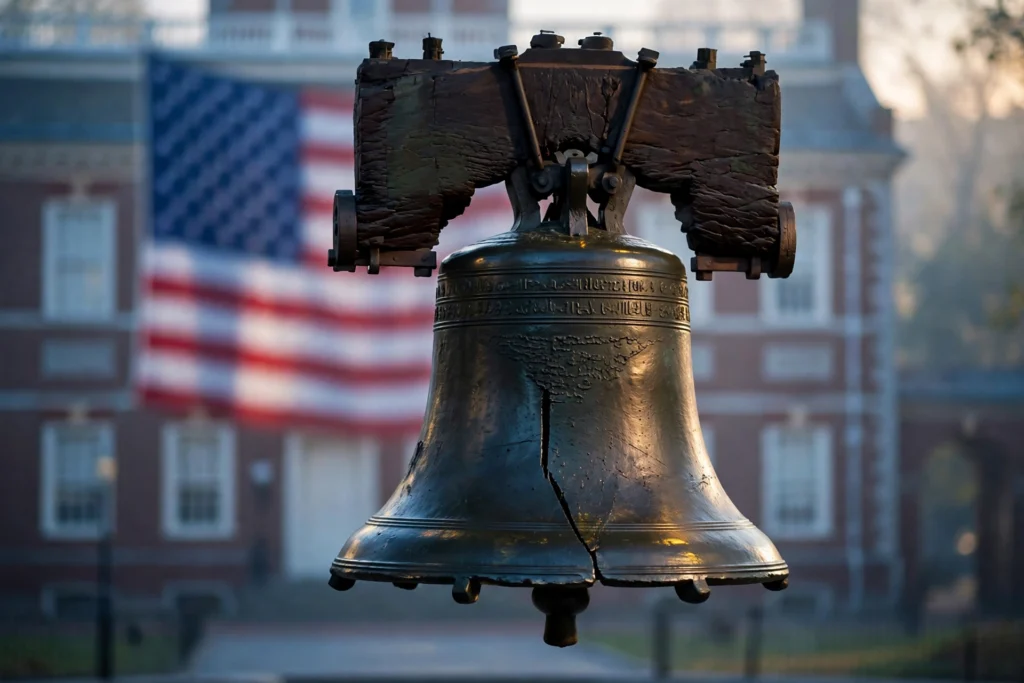
The first commemoration took place on February 1, 1942, at the Academy of Music in Philadelphia. About 3,500 people attended, held a mass Pledge of Allegiance, and laid a wreath at the Liberty Bell. A parade of forty flag-bedecked automobiles followed, according to a contemporary report in the Baltimore Afro-American. The wreath-laying at the Liberty Bell became the day’s enduring tradition, repeated every year since.
Wright died in 1947, a year before his campaign succeeded. On June 30, 1948, President Harry S. Truman signed the bill — Public Law 842 — designating February 1 as National Freedom Day. The law did not create a federal holiday; it encouraged national observance and provided that the President may issue a proclamation each year designating February 1 as National Freedom Day. That provision still stands today in the U.S. Code (36 U.S.C. section 124). Wright’s own phrase for the movement — “Tell ’em we’re rising!” — became an anthem for the post-war Black middle class he embodied.
The Liberty Bell tradition
The Liberty Bell, on display at Independence Hall in Philadelphia, is the day’s symbol for a reason that goes beyond Philadelphia pride. Cast in the 1750s with the inscription “Proclaim Liberty Throughout All the Land Unto All the Inhabitants Thereof,” it had already been adopted by abolitionists in the 1830s as an emblem of emancipation, decades before Wright’s campaign.
Laying a wreath at the bell therefore ties two histories together: the Revolution’s promise of liberty, and the Civil War’s reckoning with who that promise covered. The National Freedom Day Association, which Wright founded, long organized the Philadelphia observance, including a banquet and scholarships. In 2010, President Barack Obama linked the day to a wider cause, designating January as National Slavery and Human Trafficking Prevention Month, culminating on February 1 with National Freedom Day.
How to mark National Freedom Day 2027
This is a solemn observance, and the ways of marking it fit that tone better than a party does:
- Read the amendment aloud. The 13th Amendment takes under a minute to read. Reading it with family, a class, or a community group — including its punishment clause, and discussing what it left unresolved — is the most direct way to honor the day.
- Learn one local story. Every American town has some connection to slavery, emancipation, or the civil rights movement: a church, a school, a street name, a courthouse record. Local libraries and historical societies are the best place to start.
- Visit, or plan a visit to, Philadelphia. The Liberty Bell Center at Sixth and Chestnut Streets is free to enter, and Independence Hall stands across the street.
- Teach it as the opening of Black History Month. For teachers and parents, February 1 is a natural first lesson: start with Lincoln’s signature and Wright’s campaign, then let the month’s other stories follow from it.
- Support the work that continues. January’s designation as National Slavery and Human Trafficking Prevention Month means February 1 is also a moment to learn about modern trafficking and the organizations working against it.
- Share the story of Wright himself. Telling his story — nine years old at the signing, eighty-six when he started the campaign — is itself an act of remembrance.
- Pause at the bell, wherever you are. A moment of silence, a wreath or flowers laid at a local memorial, or simply the reading of the amendment, all echo the 1942 ceremony.
No 2027 National Freedom Day events, deals, or special offers have been verified from official sources at the time of writing (November 5, 2026). Philadelphia’s annual wreath-laying and any 2027 ceremonies will be announced closer to the date by the National Park Service and local organizers; check their official channels rather than third-party listings before travelling.
Words for the day
Because the day is reflective rather than festive, the words that suit it are quiet ones: “Freedom is not a gift finished in a day; it is a promise renewed every generation.” “On February 1, we remember both a signature and a struggle — the amendment proposed, and the work still to do.” “Tell ’em we’re rising” — Major Richard Robert Wright Sr.’s words, and National Freedom Day’s founding spirit.
Frequently asked questions about National Freedom Day 2027
When is National Freedom Day 2027?
Monday, February 1, 2027. The observance is fixed on February 1 every year.
Is National Freedom Day a federal holiday?
No. It is a federal observance, not a federal holiday. Government offices, banks, schools, and businesses follow normal hours, and nobody gets the day off for it. The 1948 law encourages observance and allows the President to issue an annual proclamation, but it does not mandate a holiday.
Why February 1?
Because February 1, 1865, is the day President Abraham Lincoln signed the joint congressional resolution proposing the 13th Amendment. The date was chosen by the day’s founder, Major Richard Robert Wright Sr., precisely for that anniversary.
Who founded National Freedom Day?
Major Richard Robert Wright Sr. (1855-1947), born into slavery in Georgia, later an educator and banker in Philadelphia. He founded the National Freedom Day Association, organized the first commemoration on February 1, 1942, and lobbied Congress until the day was signed into law in 1948, a year after his death.
What is the difference between National Freedom Day and Juneteenth?
National Freedom Day (February 1) marks the proposal of the 13th Amendment in 1865. Juneteenth (June 19) marks the day in 1865 when enslaved people in Galveston, Texas, learned they were free. Juneteenth is a federal holiday; National Freedom Day is an observance. Both belong to the same emancipation story, at different points in it.
What happens at the Liberty Bell on National Freedom Day?
A wreath-laying ceremony at the Liberty Bell in Philadelphia, a tradition since the first commemoration in 1942.
Do schools close on National Freedom Day?
No. Schools stay open, and many use the day for lessons on the 13th Amendment, emancipation, and civil rights, often as the opening of Black History Month teaching.
What are the next National Freedom Day dates?
Monday, February 1, 2027; Tuesday, February 1, 2028; and Thursday, February 1, 2029.
A day that began with one man’s memory
National Freedom Day endures because it is personal in a way most observances are not. It does not mark an abstract idea, but a signature on a specific winter day — and the determination of a man who was a child when that signature was made, and an old man when he made the country remember it.
On Monday, February 1, 2027, the simplest observance is also the truest: read the amendment, remember Wright, and consider what freedom still asks of the living.
For lighter January reading, see National Popcorn Day 2027, National Pie Day 2027, and National Puzzle Day 2027. For the festive season, see Hanukkah 2026 and Best Christmas Movies.
Sources and further reading
- Time and Date — National Freedom Day
- Encyclopedia of Greater Philadelphia — National Freedom Day
- Dickinson College, House Divided — Why is February 1st Designated as National Freedom Day?